
Glenview Garage Door Guide
What Sends a Garage Door Off Its Track in Glenview
Glenview's housing runs 1938 to 1996 with a 1968 median, and the cold-moderate winters here work on original track hardware. Here's what actually knocks a door off track.
- Licensed & Insured
- Same-Area Service Calls
- Upfront Pricing
Checking It Yourself
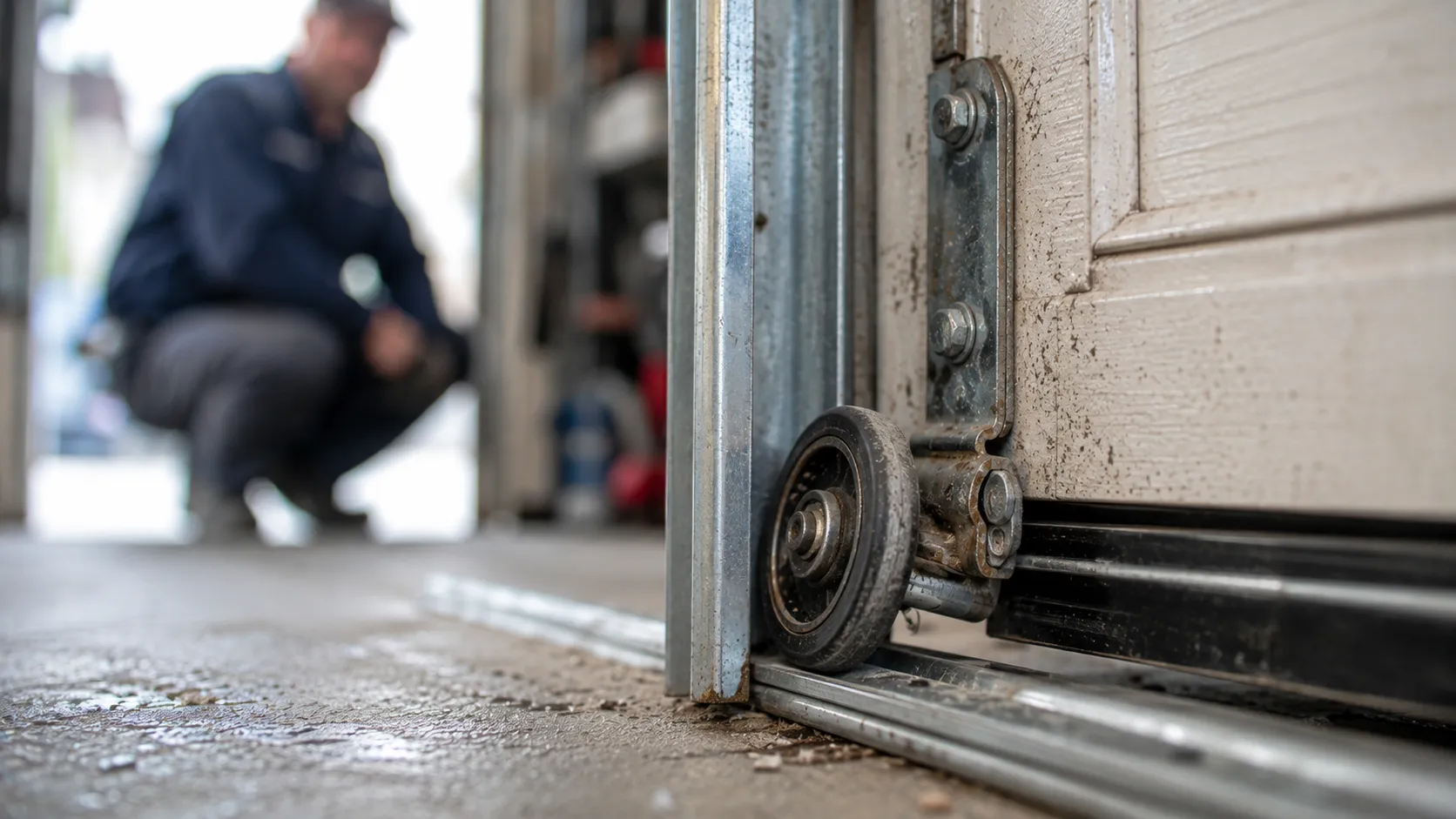
Open the door partway and look at the gap between the roller and the track wall. If you can see daylight on one side where you can't on the other, the track has already shifted. Run your hand along the vertical section near the bottom bracket - a lot of Glenview garages still have the original steel track from whenever the house was built, and after decades that metal develops a slight bow you can feel before you can see it.
Check the mounting brackets where the track bolts to the framing. On houses from the 1960s and '70s, which make up most of the stock in the 70 named areas around here, those brackets often have fewer anchor points than current hardware uses. A loose bracket lets the whole track walk sideways a little every time the door cycles.
Last thing: listen. A door riding true is close to silent going up.
A grinding or popping sound partway through the cycle usually means a roller has already jumped the track, even if the door still looks like it's closing all the way. Don't keep running it once you hear that - you'll bend the track further and turn a $150 fix into a full track replacement.
What the Weather Here Does to It
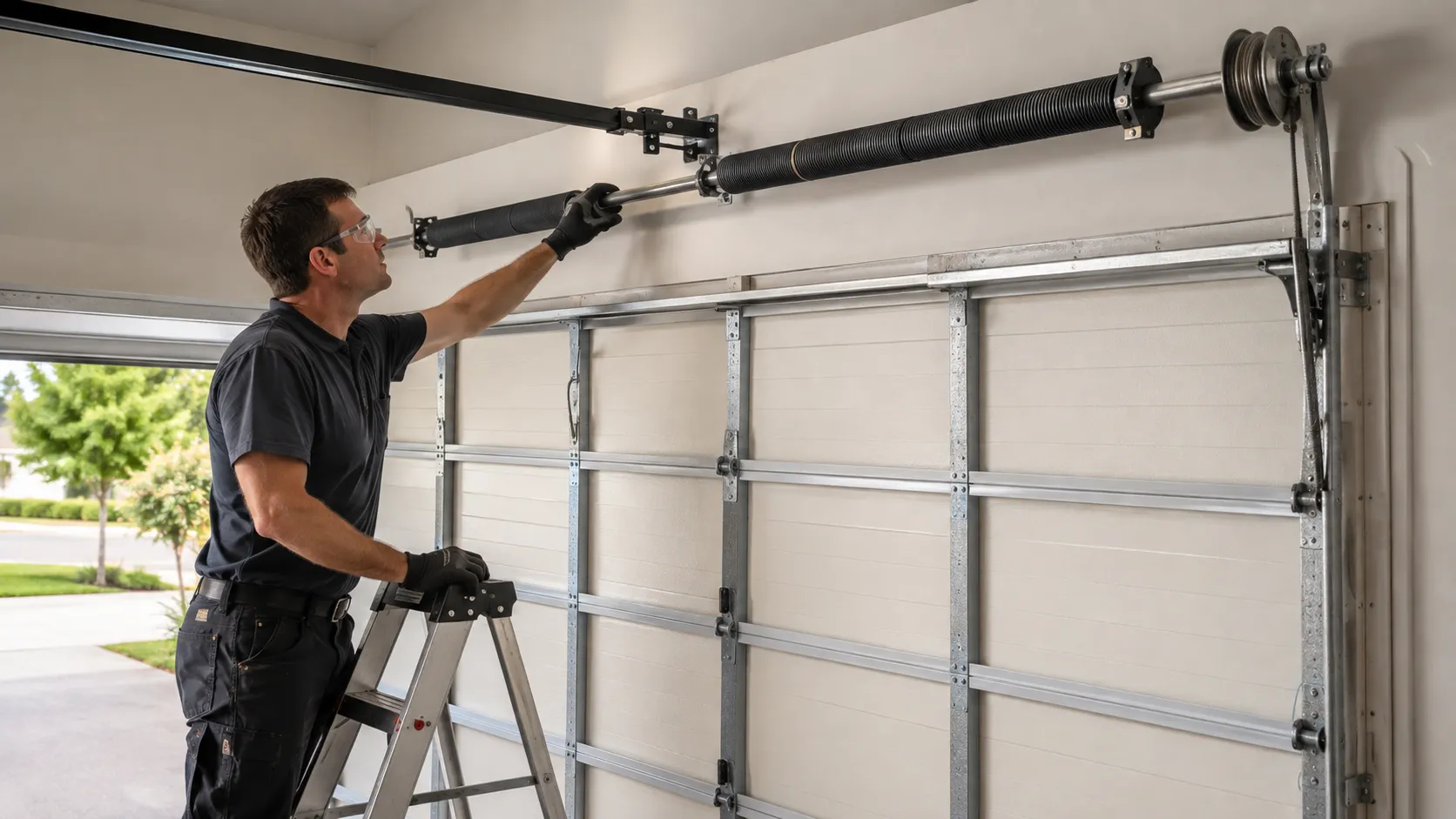
Glenview sits in a cold-moderate climate band, which means the garage door hardware here goes through a real freeze-thaw cycle most winters, not just an occasional cold snap. Steel track contracts in the cold and expands again once temperatures climb back up, and it does this dozens of times a season. Every cycle works on the bolts holding the track to the jamb.
On a lot of the original installs from the 1960s and '70s, those bolts were driven into framing that's now had sixty winters to move. A bracket that was snug in 1968 can be a sixteenth of an inch loose today, and that's enough play for the track to drift out of plumb over a few seasons.
Cold also stiffens the lubricant in the rollers, if there's any grease left at all after this many years. Stiff rollers drag instead of rolling smoothly, and a dragging roller pulls sideways on the track instead of straight down it. That sideways pull is one of the more common reasons a door that closed fine in October starts binding by February.
The Problem
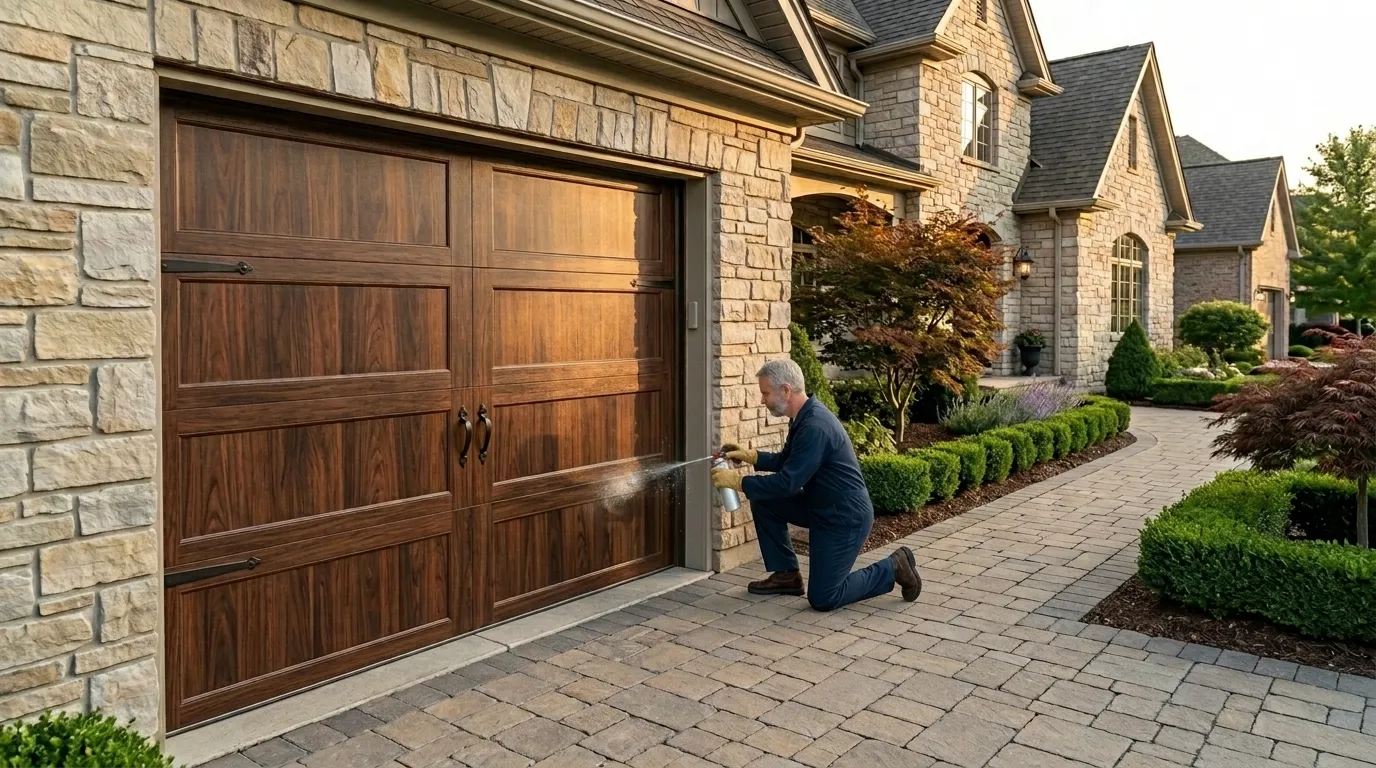
Across the service area - 359,594 households and 173,378 owner-occupied houses - a big share of the garage doors were installed when the house went up, somewhere between 1938 and 1996, median around 1968. That's the root of most off-track calls we see: not a single dramatic event, just hardware that's outlived its design life.
Track goes off in a few specific ways. The bracket loosens and the whole rail leans out of vertical.
A roller wears down enough that it no longer fills the track channel and starts riding the edge instead of the center. Or someone backs a car into the bottom section and bends it a few degrees - that one's sudden, the other two are slow.
On the older stock that's common through this area, we also see track that was never quite right for the door weight it's carrying, if a heavier insulated door was swapped in at some point without upgrading the hardware underneath it. That mismatch shows up as a door that runs fine for a year or two, then starts drifting.
When to Call Someone
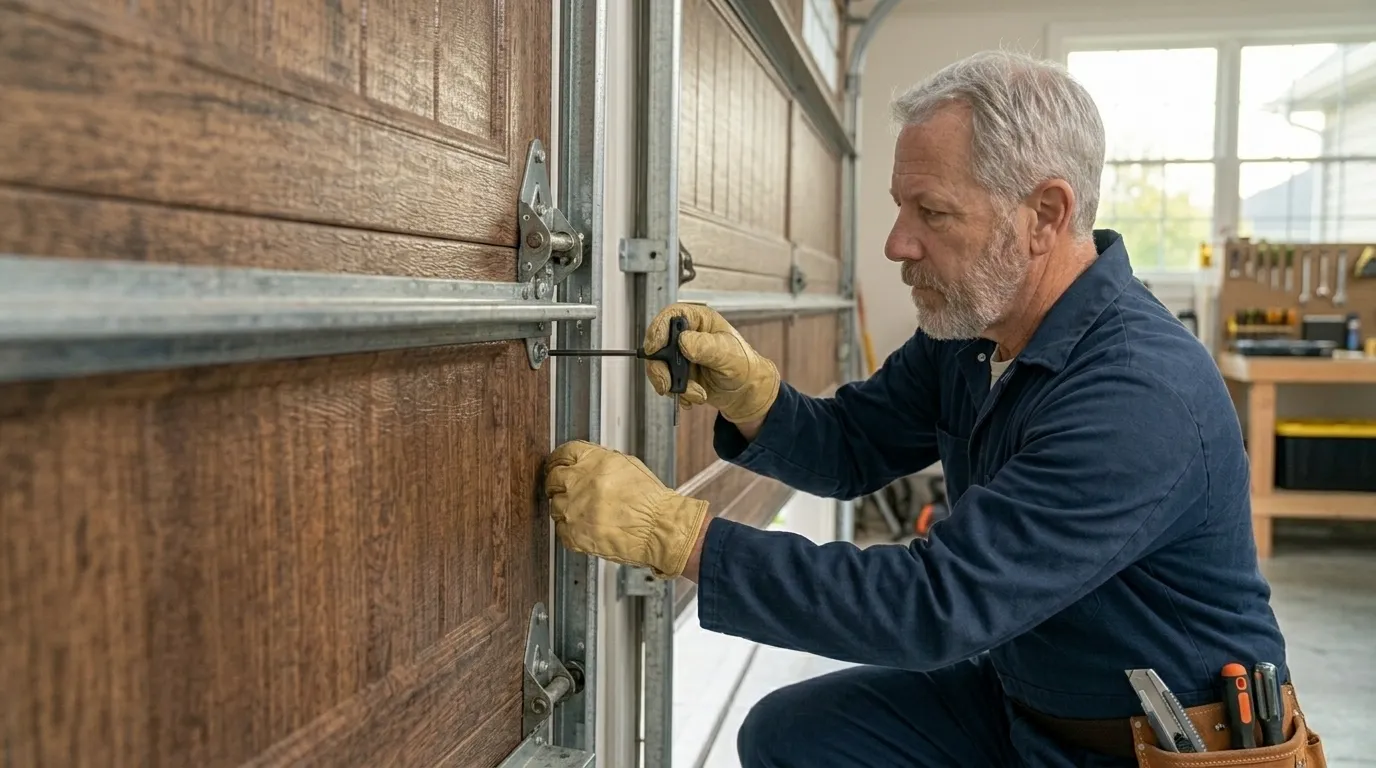
If the door is still moving but you can see the track has bowed or the brackets have pulled away from the framing, that's a call, not a DIY fix. Track under spring tension can whip if you loosen the wrong bolt, and we'd rather you not learn that the hard way.
Here's the honest limit: a track that's bent more than slightly can't be bent back straight and trusted. We replace it rather than reshape it, and on a lot of the original 1960s-era installs that means replacing brackets too, since the old anchor pattern won't match new track. That's a real cost, and we won't tell you a $40 part will fix a problem that needs $300 of new rail and hardware.
One thing we don't do: chase a door that keeps coming off the same section of track over and over without also replacing the worn rollers causing it. Fixing the track and leaving forty-year-old rollers in place just means you'll be back here in six months.
How We Can Help
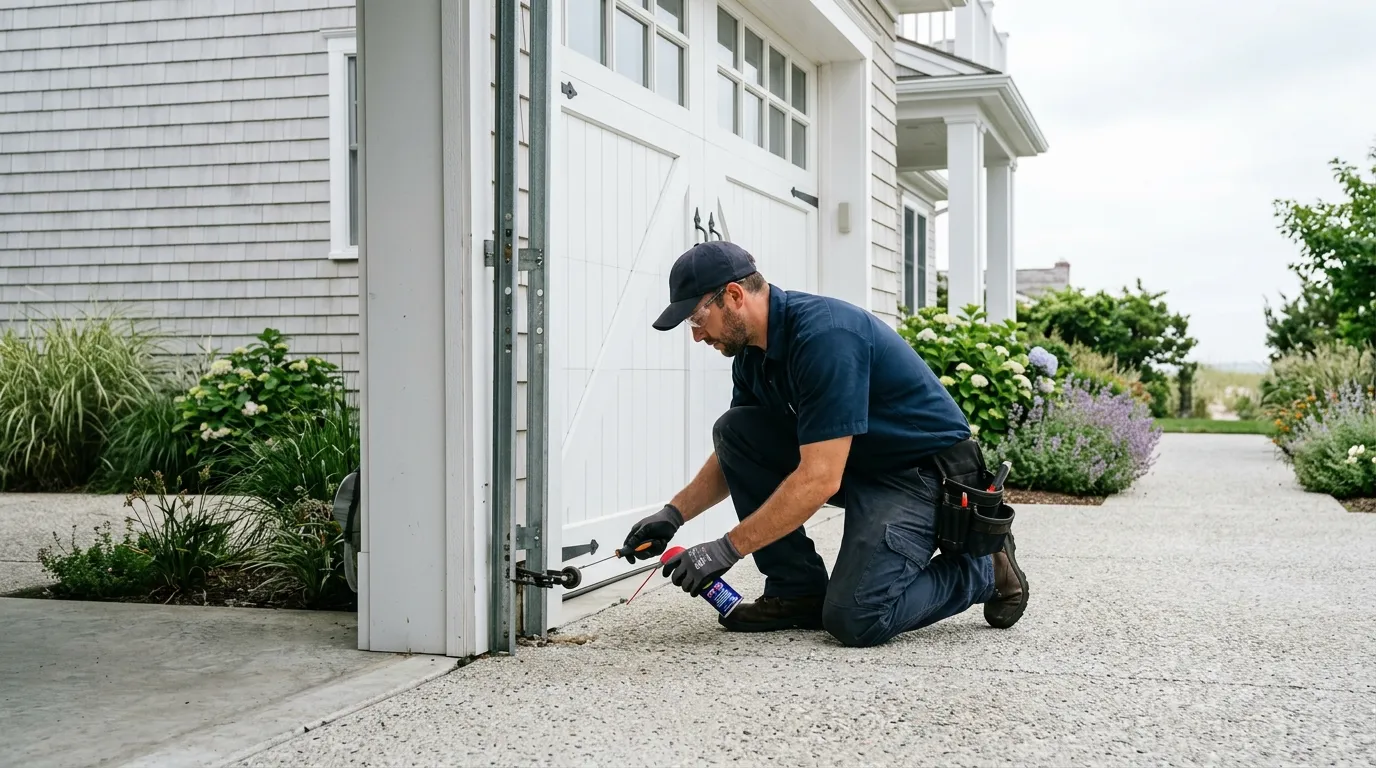
Garage Door Repair
Springs, cables, tracks, rollers, and openers fixed by a tech who explains the problem before touching anything.
Learn more →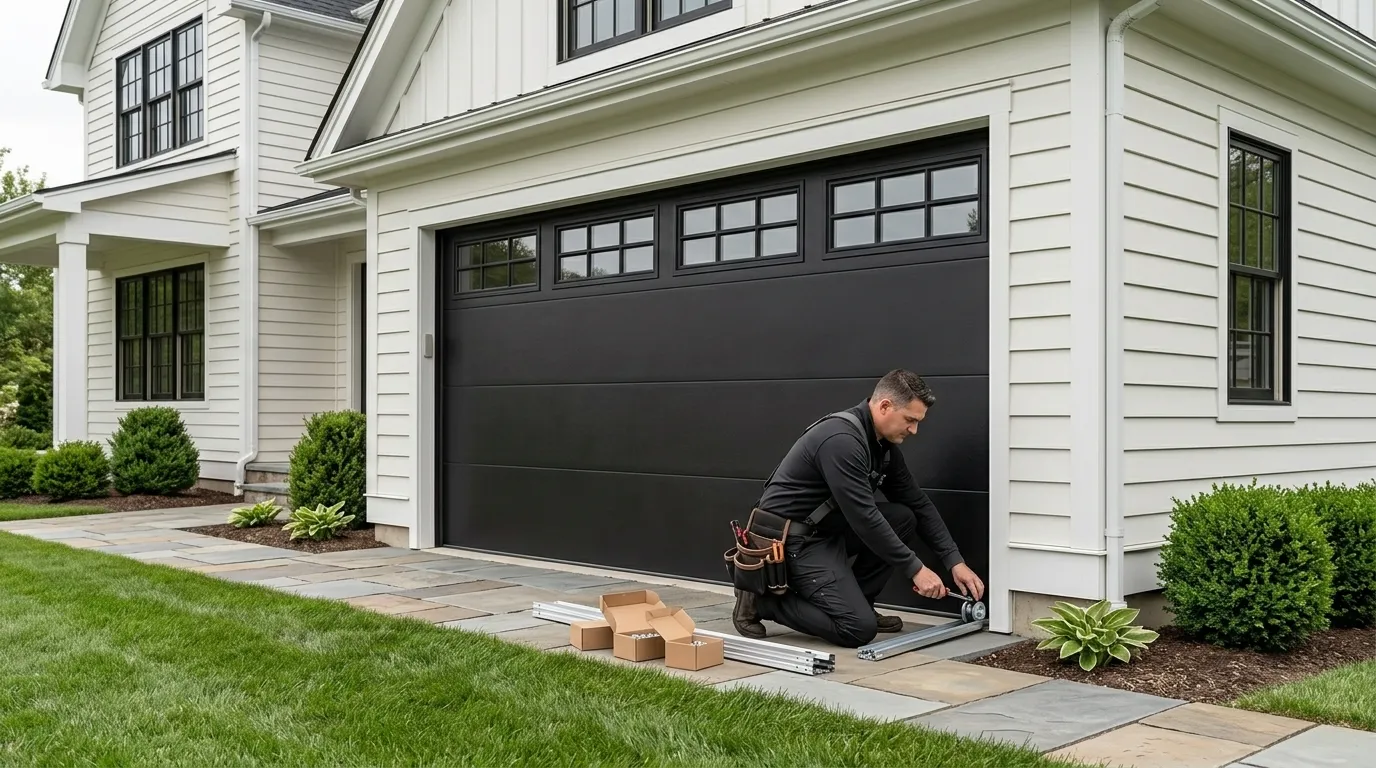
Garage Door Installation
New sectional doors sized and installed for the housing stock actually built in this area.
Learn more →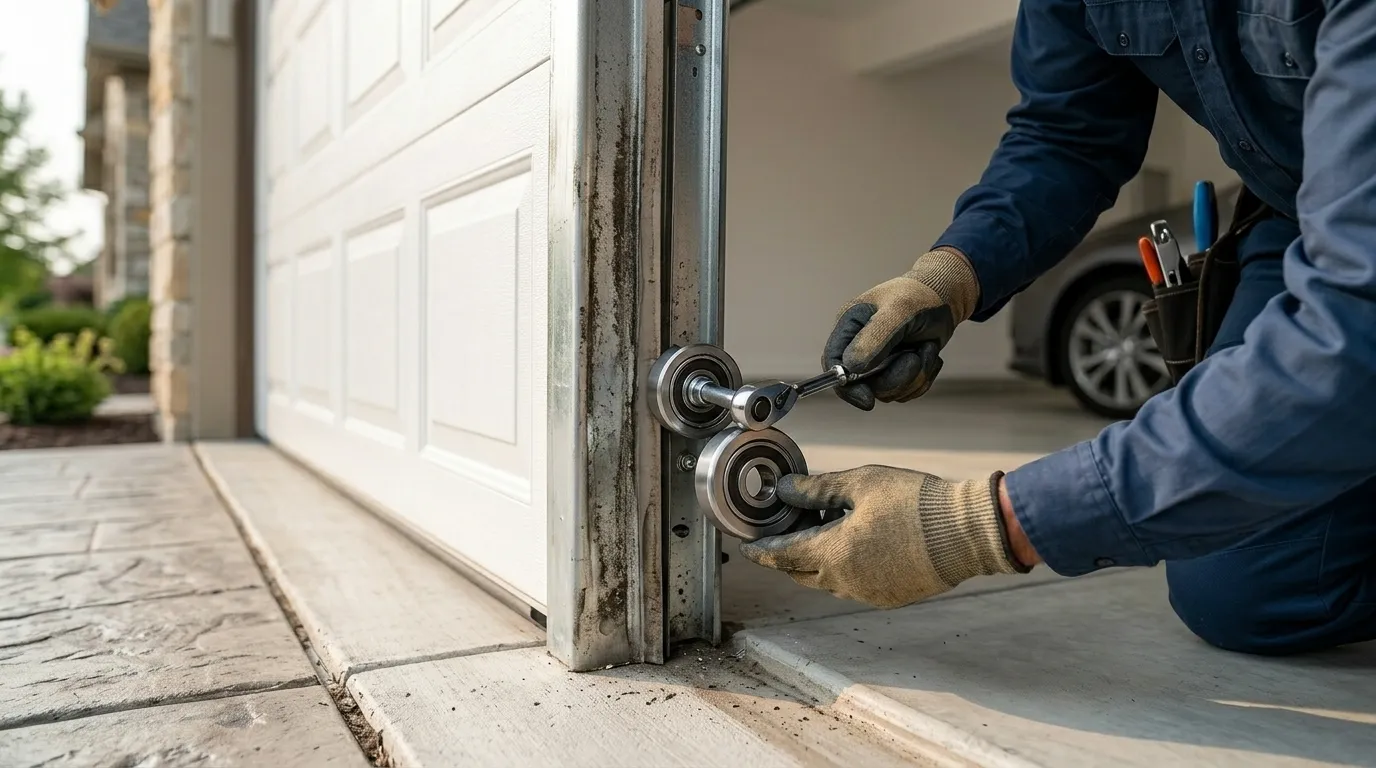
Garage Door Service
Tune-ups, lubrication, and safety checks that catch a small problem before it becomes a service call.
Learn more →Frequently Asked Questions
How do I know if my garage door track is bent or just loose?
Loose track usually shows as a gap that changes size as the door moves - wider at the top, tighter at the bottom, or vice versa. Bent track has a visible kink or bow you can sight down the rail and see, even with the door closed. Loose is a bracket tightening job; bent almost always means replacing that section.
Why did my door come off track suddenly with no warning?
Usually there was warning - a roller had been dragging or a bracket had been loosening for months - it just didn't fail completely until something pushed it over the edge, like a cold morning stiffening the rollers further or one more freeze-thaw cycle working a bolt loose.
Is it worth fixing the track or should I replace the whole door?
Depends on the door's age and what else is going. If it's original hardware from a house built decades back and the springs and opener are also getting old, doing the track alone just means you're back for the next worn part soon. If everything else is sound, fixing the track by itself is the right call.
Can I put the roller back in the track myself?
If the door is down and there's no spring tension on that section, sometimes yes - you can sometimes walk a roller back into the channel by hand. But if the track is bowed or the bracket's loose, it'll pop back out. Don't force it while the door is under tension.
Have a Door That Needs a Second Opinion?
Call and describe what it is doing - we will tell you what it likely is.