
Service
Garage Door Service for Glenview's 1960s and 70s Housing Stock
Glenview homes built mostly in the 1960s and 70s still run original torsion hardware. Cold-weather spring failure is common here. We diagnose and fix it on-site.
- Licensed & Insured
- Same-Area Service Calls
- Upfront Pricing
What Happens When You Call
-
1
Call or Request a Quote
Tell us what the door is doing and roughly how old the house is - that alone points us toward the likely part before a truck leaves.
-
2
On-Site Diagnosis
A tech checks the spring, cables, tracks, and opener in person and tells you plainly what is actually wrong.
-
3
Straight Price, No Surprises
You get a number before any work starts. It covers parts and labor, nothing added after the fact.
-
4
Fixed the Same Visit
Most repairs are done in one trip. If a part needs sourcing, we tell you that upfront instead of guessing.
How Long You Are Without the Door
Most calls we get in Glenview aren't a dead opener - they're a spring that let go overnight, and now the door won't budge or it slams down when you touch the wall button. Once we're on-site, a torsion spring swap on a standard double door usually clears in under two hours, including pulling the old spring and setting tension on the new one. If the cable jumped the drum too, or a track bent when someone tried to force the door open by hand, that adds time to true up the rails and reseat the rollers.
We don't quote a number we haven't checked - some jobs on original 1960s hardware take longer because the drums and bearing plates aren't the sizes anyone stocks in a truck anymore, and we have to adapt a modern spring to an old mount. That's the honest limit: if your door is running the same torsion shaft it had when the house was built, plan on the visit taking longer than a same-day service call on a 2005 opener.
Why It Happens Here
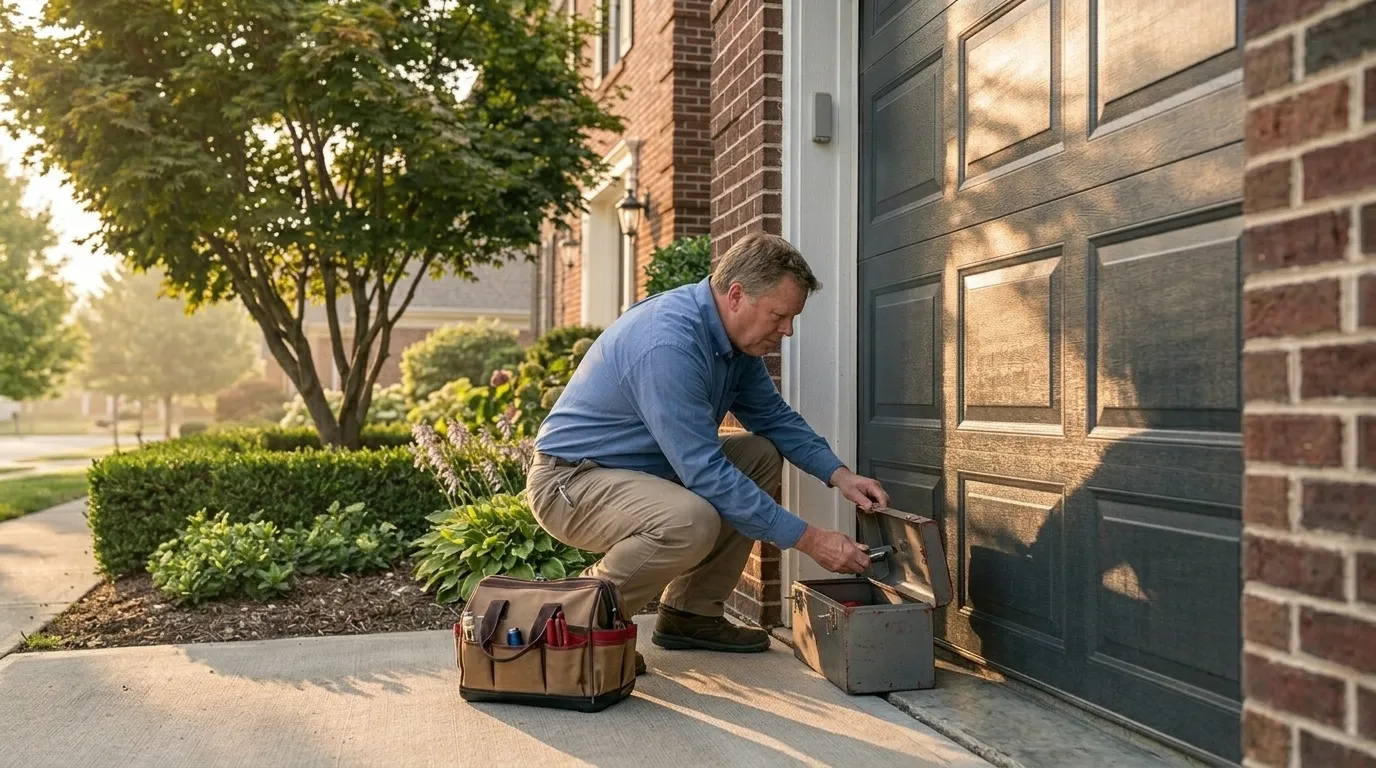
F1 and F2 matter here: housing in this service area was built mostly between 1938 and 1996, with the bulk going up in the 1960s and 70s. A torsion spring is rated for a cycle count, not a calendar, but age still tells on the metal - fifty-plus years of expansion and contraction through cold winters leaves the coil brittle at the ends, which is where it snaps. Add the climate band this area sits in - cold, moderate - and you get a spring that's already fatigued from age getting hit with a hard temperature swing overnight.
Steel contracts in the cold and loses a little flexibility right when the door's being asked to lift a full sheet of ice-crusted weight off the slab. That combination - old coil, cold snap - is why we see spring failures cluster in the same months every year, and why it's rarely a surprise to the door itself, just to the owner standing in the driveway.
The Symptom
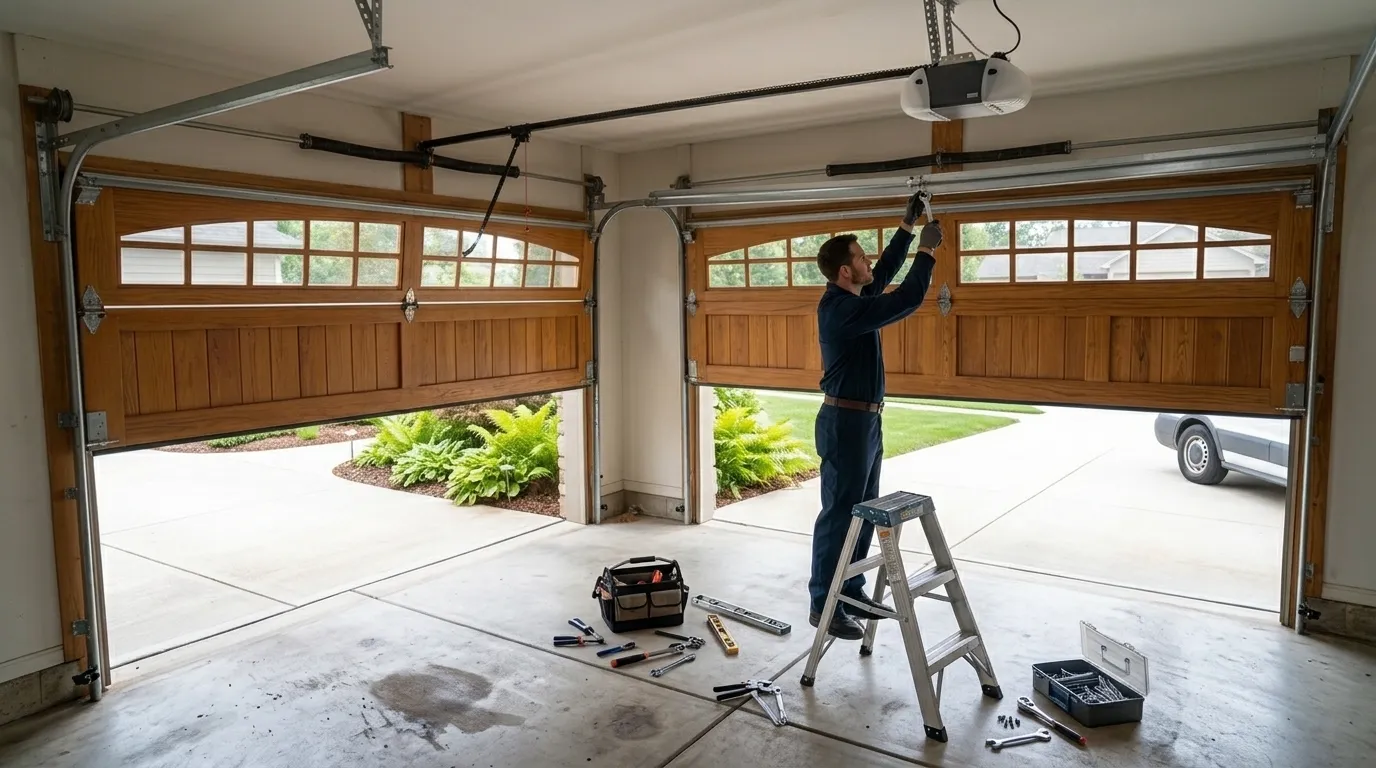
The tell is almost always the same: the door won't lift past a few inches, or it lifts unevenly, one side dragging while the other side races up. Sometimes there's a loud bang from the garage overnight - that's the spring letting go, not a break-in.
On older torsion setups original to 1960s and 70s construction, you'll also see the opener straining and reversing itself, because the springs aren't holding the counterweight the way they should and the motor's doing lifting work it was never built for. If you hear grinding at the drum instead of a clean snap, that's usually a cable that's frayed and about to go next - worth mentioning when you call, since it changes what we bring on the truck.
What the Repair Takes
We measure the shaft, wire size, and wind of the old spring before touching anything, because a mismatched spring on a door this age can put uneven tension on hardware that's already a few decades old. On a standard double door we're usually setting a matched pair of springs, checking the cable and drums for wear from all those years of cycles, and running the door through a full open-close test with the opener disconnected first.
If the winding cone or bottom bracket has worn oval - not uncommon on original 1960s-70s hardware - we'll flag it rather than force a spring onto a mount that won't hold tension safely. That's a case where replacing a bracket costs less up front than a callback six months later.
Talk to a Technician Before You Book
Describe what the door is doing and get a straight answer on what it likely needs.
Other Ways We Can Help
Jobs Like Yours
Recent work from this service line.
Why Glenview Calls Us
Frequently Asked Questions
Why did my spring break with no warning?
Torsion springs fatigue with age and cycles, and in this cold-moderate climate band a hard overnight temperature drop is often what finally breaks a coil that was already brittle. Houses built in the 1960s and 70s are old enough now that original springs are past their useful life, so the break feels sudden even though the wear was years in the making.
Can I drive the opener to force the door open?
No. With a broken spring, the opener is lifting the full weight of the door alone, which strains the motor and gears and can crack the drums. Disconnect the opener, leave the door down, and call - forcing it usually turns a spring job into a spring-plus-opener job.
Is it worth repairing an original 1960s or 70s door?
Often yes for the spring and hardware, but if the panels are original steel and badly rusted or dented, replacement can make more financial sense than patching sixty-year-old material. We'll tell you honestly which side of that line your door is on.
Need Garage Door Service for Glenview's 1960s and 70s Housing Stock?
Call now for straight answers on cost and timing.