
Glenview Garage Door Guide
What a Service Call Actually Covers
A real look at what a garage door service call covers for Glenview homes built between 1938 and 1996, from spring wear to cold-weather track problems.
- Licensed & Insured
- Same-Area Service Calls
- Upfront Pricing
Checking It Yourself
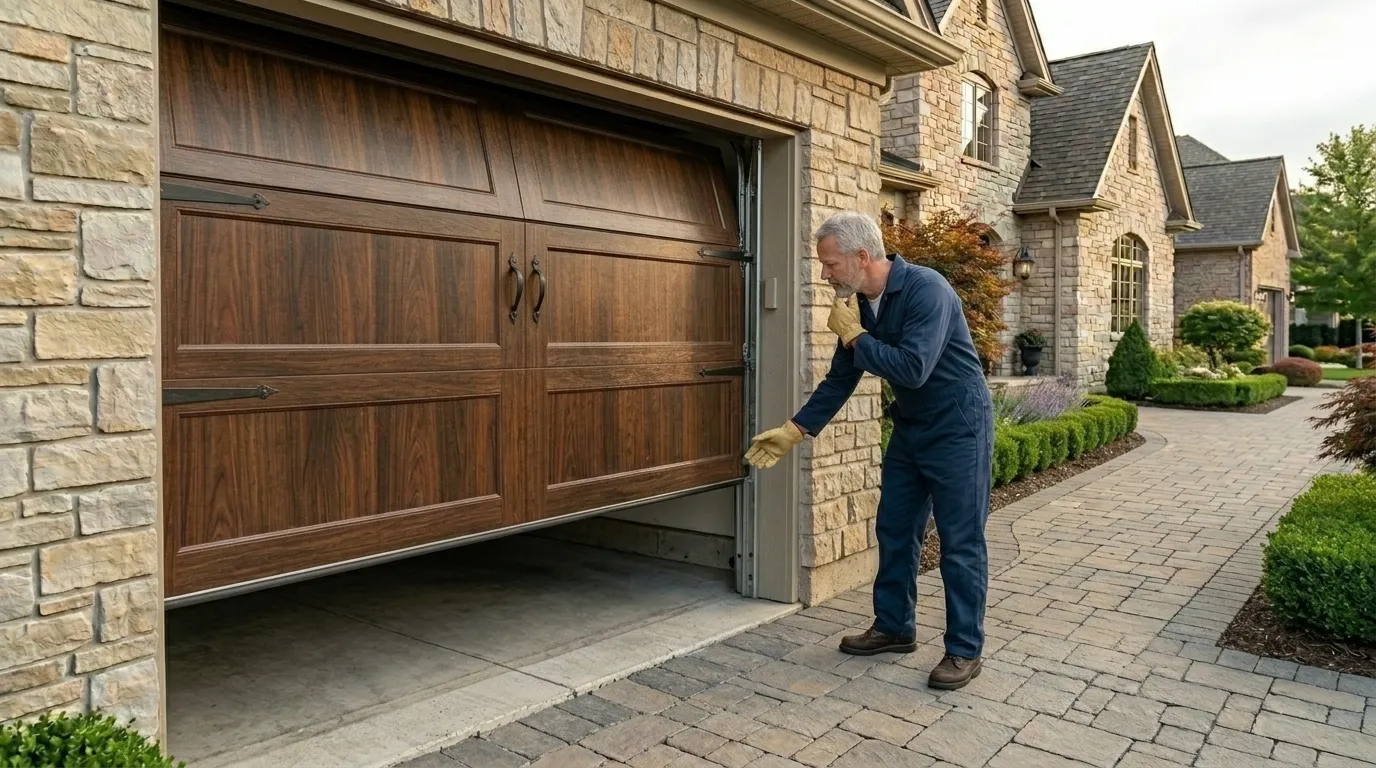
Before you call anyone, walk out to the garage and look at three things. First, the track - run your hand along it and feel for dents or spots where the rollers have worn a groove into the metal. Second, the weatherstripping along the bottom panel; if it's cracked or flattened, cold air and water are getting under the door.
Third, the torsion spring above the door. Most homes in this area were built between 1938 and 1996, with the bulk going up in the 1960s and 70s, which means torsion springs and openers sized for hardware nobody makes anymore. If the spring looks stretched, has a visible gap in a coil, or the door feels heavier to lift by hand than it used to, don't force it open with the opener - that's exactly the kind of check that tells us what we're walking into before we show up.
You can also check the balance: disconnect the opener, lift the door halfway by hand, and let go. It should hold. If it drops or shoots up, the spring tension is off and that's a job for a tech, not a homeowner with a stepladder.
What the Weather Here Does to It
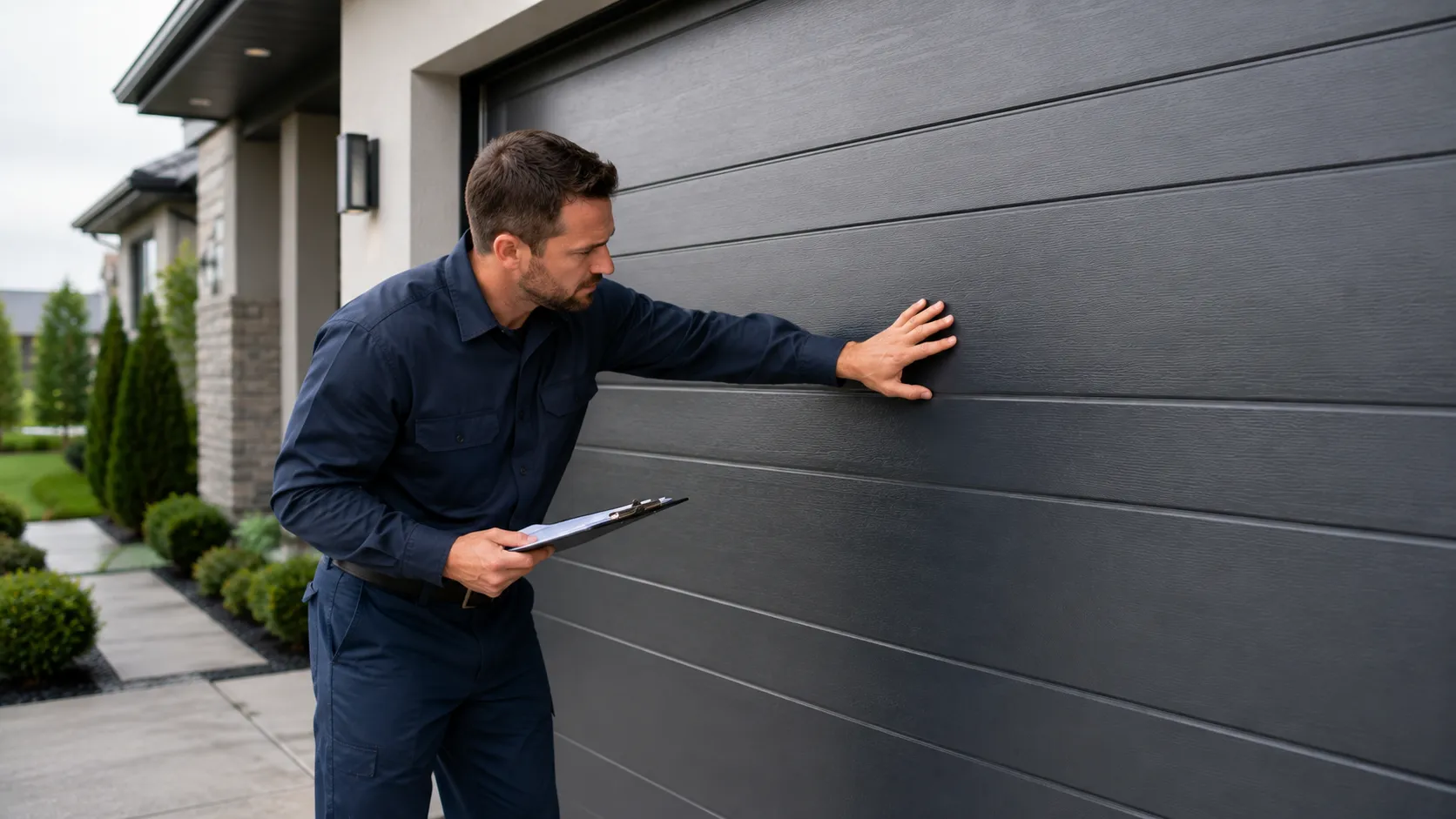
Glenview sits in a cold moderate climate band, which means the garage door gets cycled through freeze and thaw more times in a winter than most parts of the house ever see. Steel panels contract in a hard freeze and expand again on a 40-degree afternoon, and that repeated movement works moisture into seams and warps weatherstripping faster than a mild climate would.
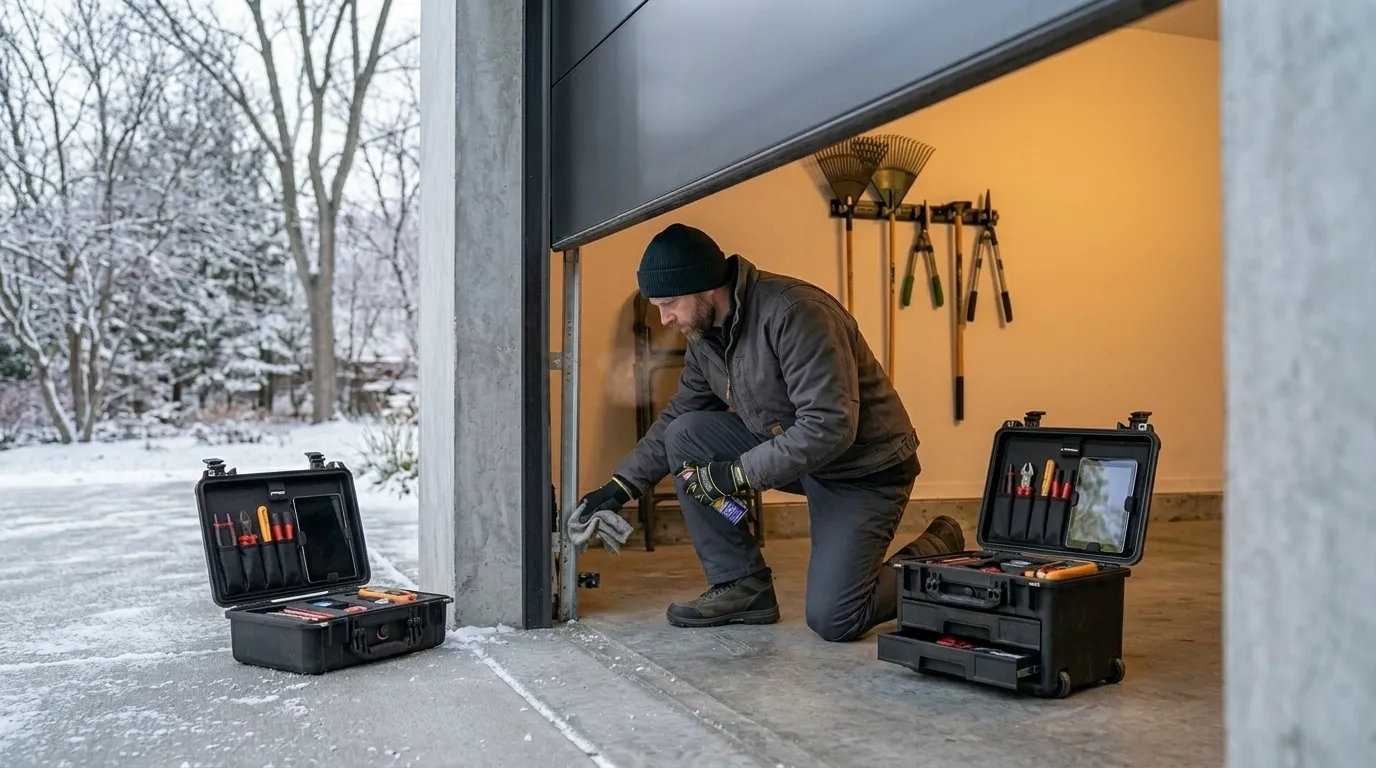
Homes built in the 1960s and 70s often have single-layer steel doors without the insulation now expected for cold-climate garages, so condensation forms on the inside of the panel and drips onto the track and rollers. " Ice buildup at the bottom seal is the other common one - the door looks closed but the seal is frozen to the slab, and forcing the opener against that ice is what snaps cables or strips the drive gear.
The Problem
A door installed when this house was built in the 1960s is now old enough that its spring has outlived two or three normal service intervals, and a lot of that original hardware is still in place because it never failed outright - it just got weaker and noisier every winter. If your house sits in one of the older sections built before 1970, the opener may still run on hardware that predates modern safety reversal sensors, which is a real safety gap, not just an inconvenience. The honest limitation here: we don't keep every obsolete torsion spring size from a 1960s build on the truck.
Some of that older wire gauge and drum combination is a special order, and if that's what your door needs, the parts lead time is a few days, not same-day. We'll tell you that up front rather than pretend otherwise. On a newer door, most of what looks like a big problem - a stuck panel, a stalled opener - is usually a bent track or a worn roller, both quick fixes.
When to Call Someone
Call before the spring fails completely, not after. A spring under tension that lets go can snap a cable or bend a track, and on the older torsion setups common in this area's 1960s and 70s housing stock, a failed spring under load is a genuine injury risk, not just a broken door. Call if the door reverses on its own partway down, if the opener runs but the door doesn't move, or if you hear a loud bang followed by the door refusing to open - that's almost always the spring.
Don't call for a door that's just noisy but still opens and closes evenly; that's usually a lubrication or roller fix you can often wait on. And if a quote comes back close to the cost of a new door, given the age of a lot of the stock here, replacement is often the better call than repeated repairs on a decades-old panel.
How We Can Help
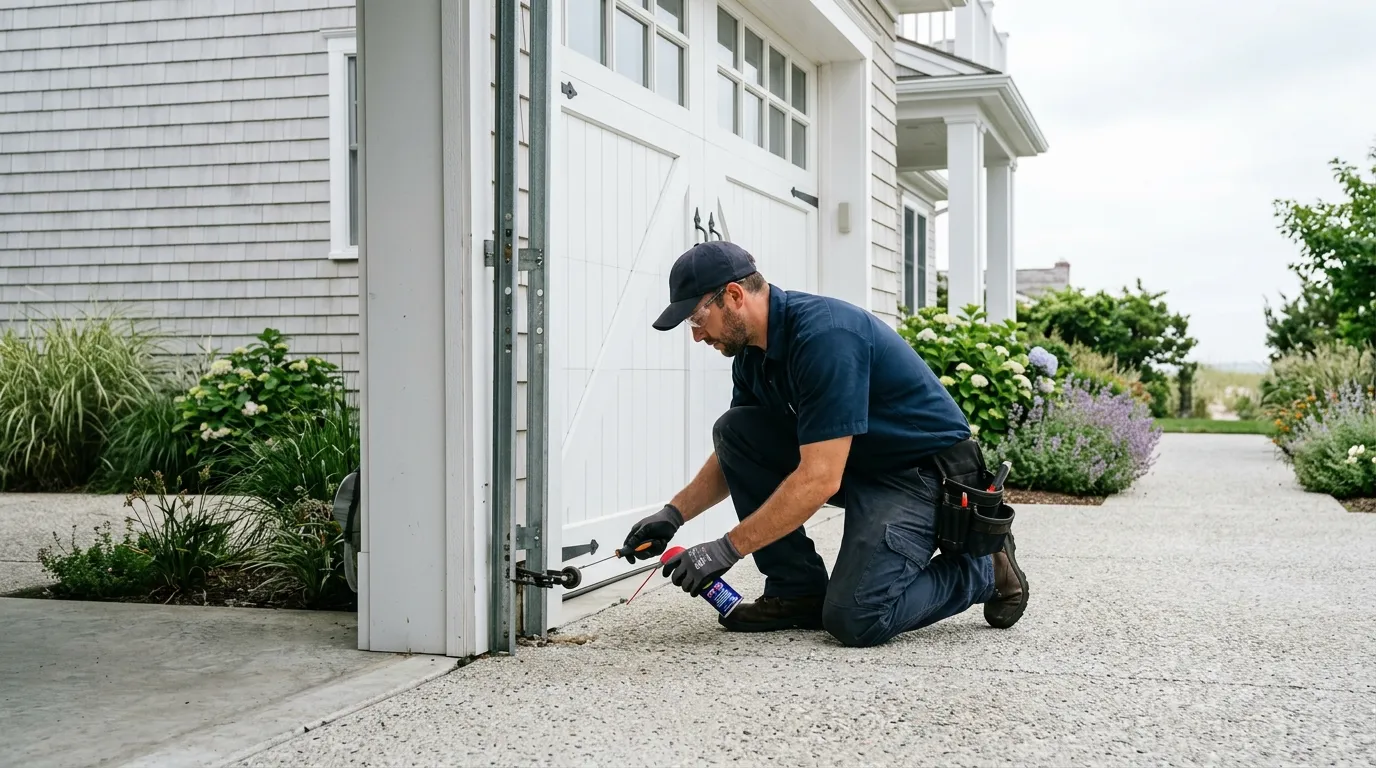
Garage Door Repair
Springs, cables, tracks, rollers, and openers fixed by a tech who explains the problem before touching anything.
Learn more →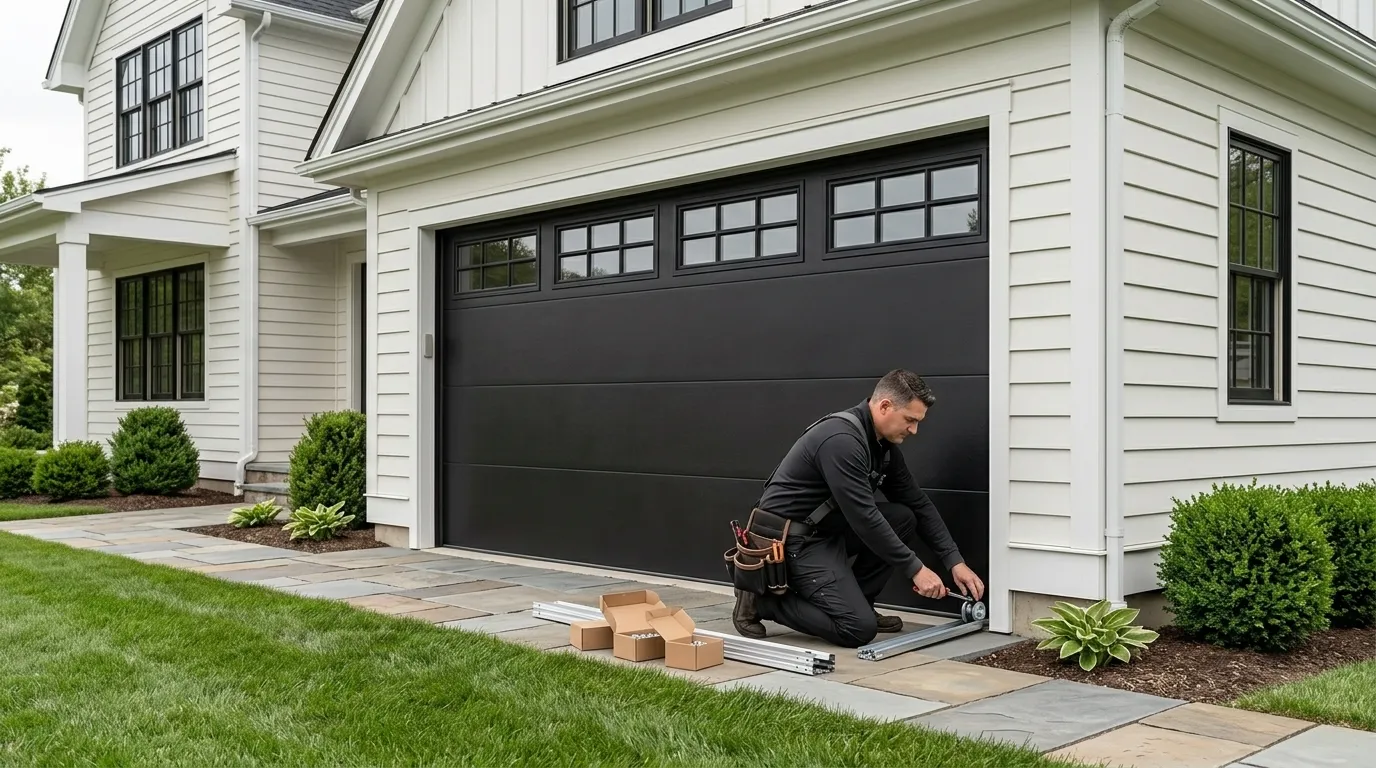
Garage Door Installation
New sectional doors sized and installed for the housing stock actually built in this area.
Learn more →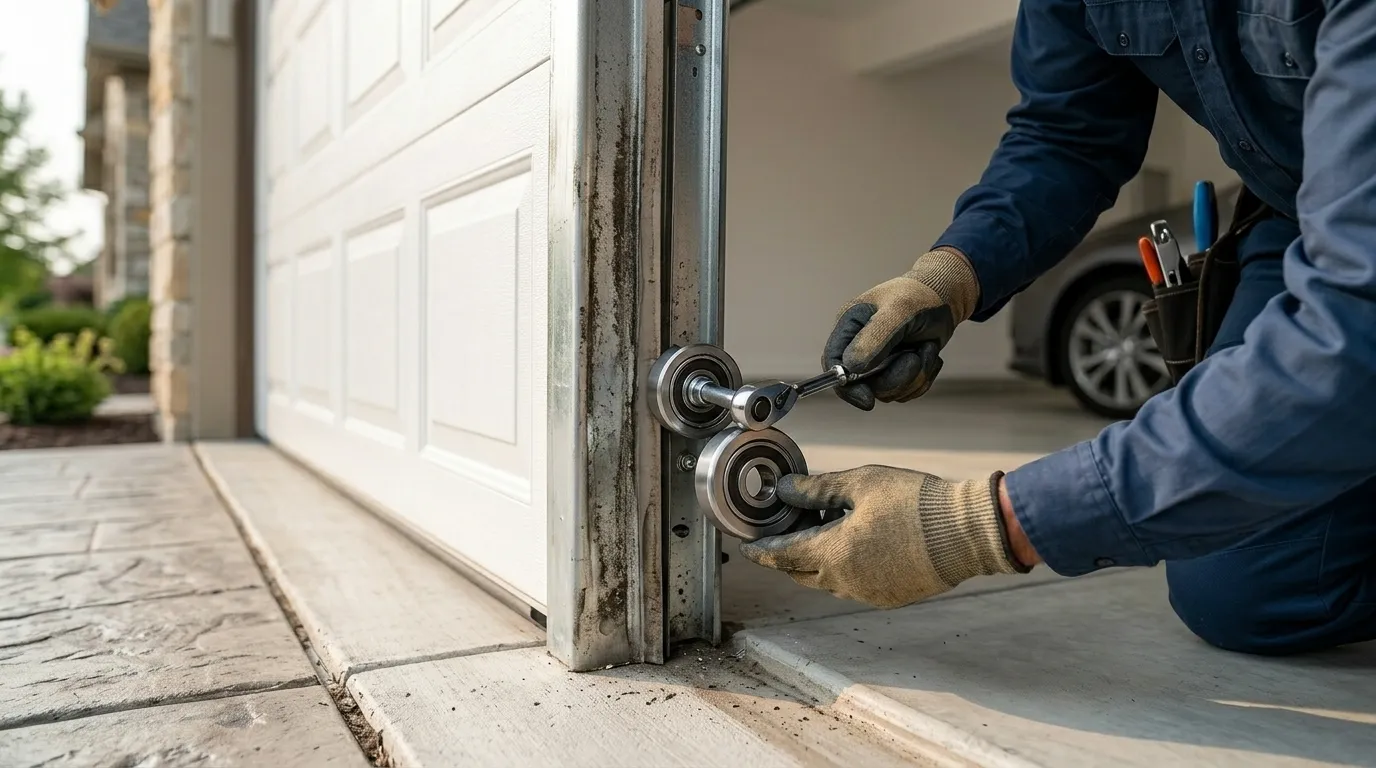
Garage Door Service
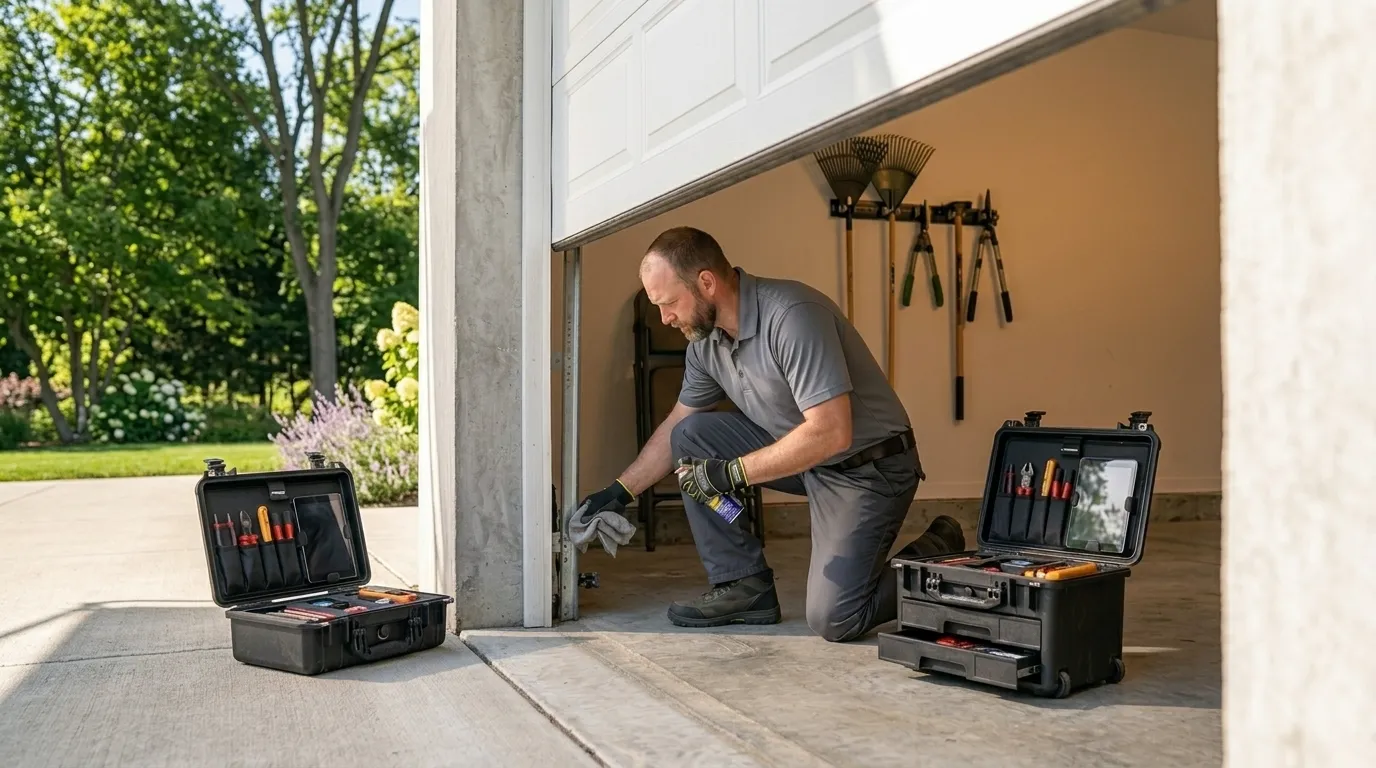
Tune-ups, lubrication, and safety checks that catch a small problem before it becomes a service call.
Learn more →Frequently Asked Questions
Why does my garage door stick more in winter?
In a cold moderate climate like Glenview's, steel panels contract and expand with the freeze-thaw cycle, and moisture works into seams and weatherstripping. On older doors from the 1960s-70s building era, that often shows up as a frozen bottom seal or rust on the track, which makes the door bind or groan as it moves.
How do I know if my spring is original to the house?
If your home was built in the 1938-1996 range typical of this area and nobody's mentioned a spring replacement, there's a good chance it's original or close to it. A visibly stretched spring, a gap in a coil, or a door that's suddenly heavy to lift by hand are signs it's due.
Do you carry parts for older torsion setups on the truck?
Not always. Some spring sizes and drum combinations from 1960s and 70s builds are special order, which can add a few days to the job. We'll tell you at the time of the call if that's what your door needs rather than guess.
Is it ever better to replace the door than fix it?
Yes, especially on original single-layer steel doors from the older housing stock here. If a repair quote gets close to replacement cost, or the door has no insulation for this climate, a new door usually makes more sense long-term than another patch repair.
Have a Door That Needs a Second Opinion?
Call and describe what it is doing - we will tell you what it likely is.