
Glenview Garage Door Guide
Garage Door Noises That Mean Something
A guide for Glenview homeowners on garage door noises tied to the area's 1960s-70s housing stock and cold winters - what's normal wear and what needs a call.
- Licensed & Insured
- Same-Area Service Calls
- Upfront Pricing
Checking It Yourself
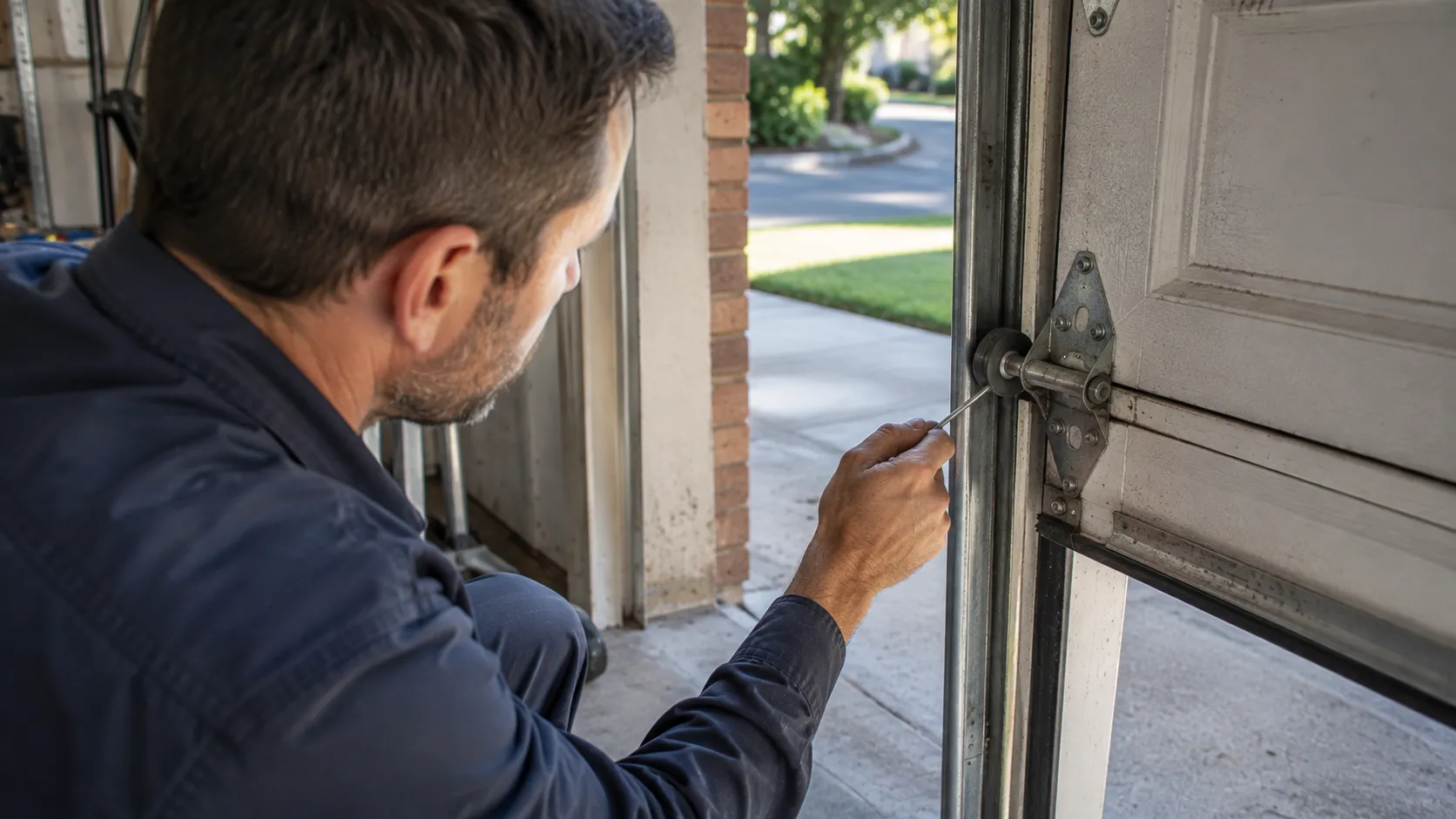
Most houses on this side of the North Shore went up between 1938 and 1996, with the bulk of that stock dating to the 1960s and 70s. If your door is original to a house from that era, you're likely running steel torsion hardware that's been rebuilt at least once by whoever owned the place before you. Start by listening with the door up about a foot off the floor.
A single sharp pop as it lifts is usually a spring seating into its cone - normal. A steady grinding the whole way up points to a roller, and on a house this age the rollers are almost never the ones that came with the door originally. Check the track brackets while you're at it; on a 1960s build they're lag-bolted into jamb framing that's shifted a little over sixty years, and a loose bracket rattles long before it fails outright.
Don't put a hand near the spring itself. That part you leave alone regardless of how confident you feel.
What the Weather Here Does to It
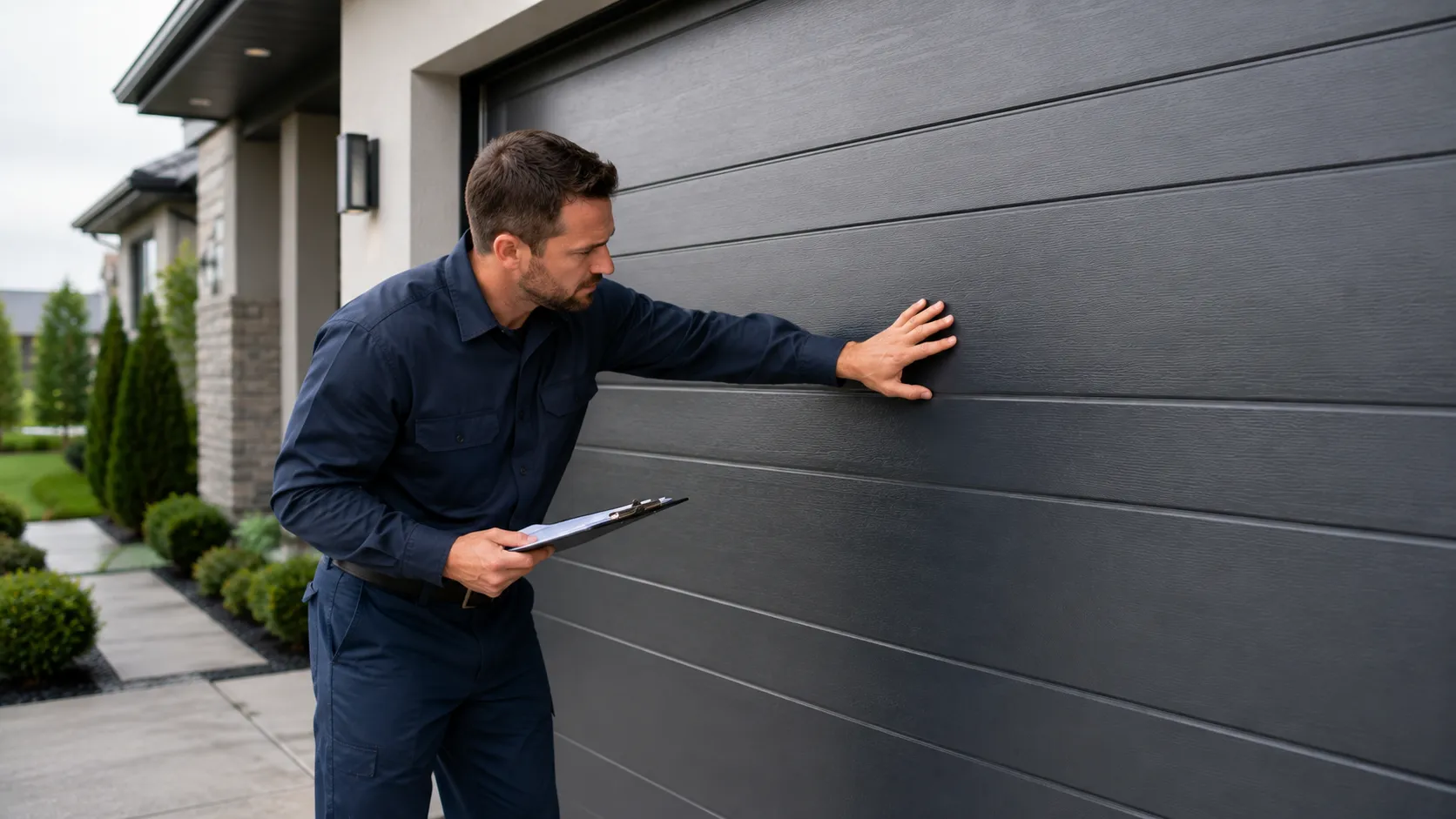
This is a cold, moderate climate, which means the door goes through a real freeze-thaw cycle every winter rather than a mild dip. Steel expands and contracts with it, and the effect shows up first at the weatherstripping - it hardens in the cold, then a warm afternoon lets it flex again, and that repeated stress is what makes the seal crack along the bottom panel edge over a few seasons. You'll also hear it in the springs.
Cold steel is stiffer and slightly less forgiving, so a spring that's been fraying quietly all summer tends to let go on the first hard cold snap, not in July. Track lubricant behaves the same way - grease that was fine in August turns gummy at 15 degrees and makes the rollers chatter on the first cold morning even when nothing is actually broken. If your door sounds noticeably worse the week temperatures drop, that's the climate talking, not necessarily new damage.
The Problem
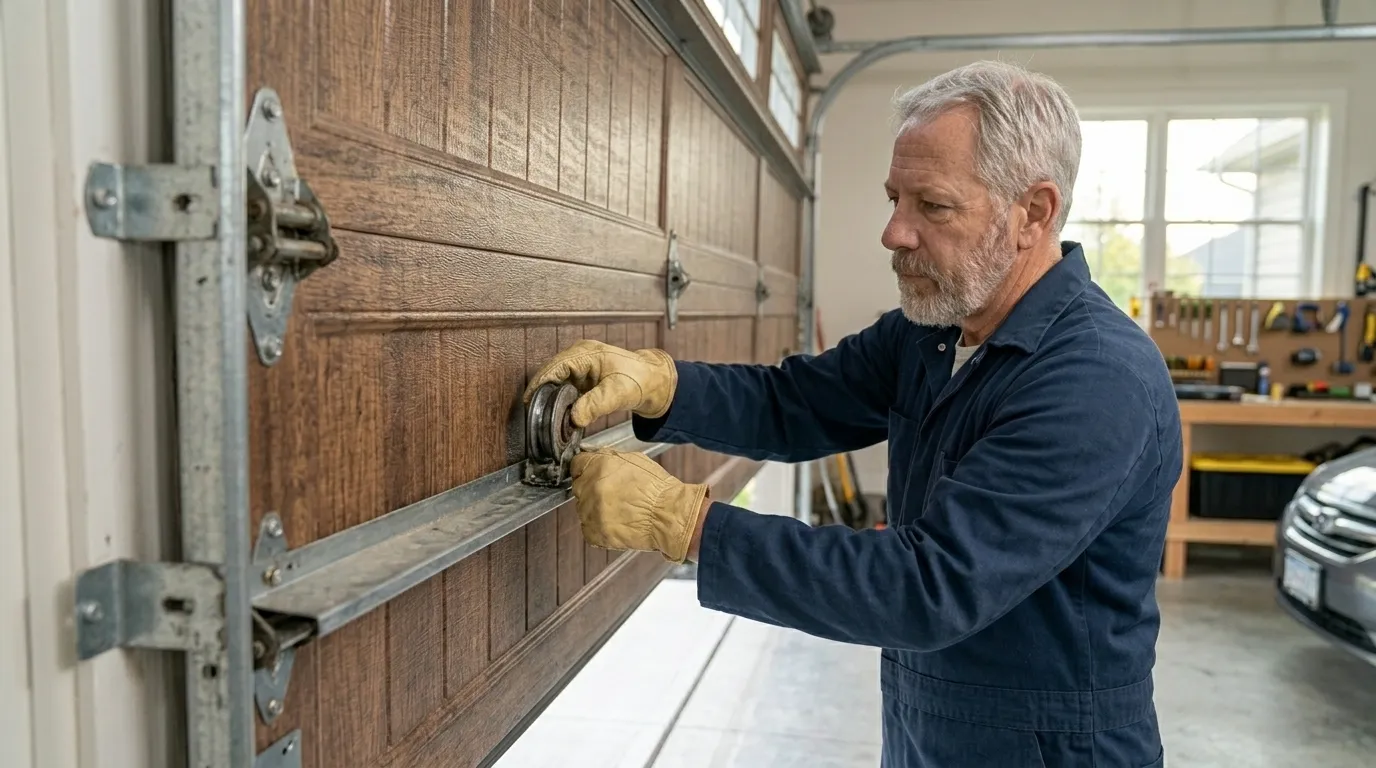
On a door built to the specs common in this area's 1960s-70s housing stock, the noise almost always comes from one of three places: rollers that were steel originally and have worn oval instead of round, a torsion spring that's fatigued after decades of daily cycles, or a track that's racked slightly out of parallel because the framing around it has settled. A grinding roller sounds different from a loose track bolt - the roller noise travels with the door as it moves, while a loose bracket makes a sharp bang at roughly the same spot on every cycle.
Cable noise is its own thing: a thin scraping sound near the bottom corners usually means a cable is riding against the drum instead of seated in its groove. None of these are emergencies by themselves, but on a door this old, one worn part usually means its neighbors aren't far behind - the hardware ages together.
When to Call Someone
Call if the noise changes character suddenly - a new bang, a snap, or the door stopping mid-travel. Those usually mean a spring or cable, and we don't recommend touching either yourself. Also call if you've had the same grinding sound for a few weeks and it hasn't gotten better; that's wear, not a fluke, and it won't fix itself.
One honest limitation: on some of the original hardware still in service on the older end of this housing stock, exact replacement parts aren't stocked anywhere and have to be special ordered, so a repair that sounds simple on the phone can take longer than you'd expect once we're on site. In some of those cases, once a door is old enough that half its hardware needs sourcing, replacing the whole unit ends up cheaper and faster than chasing parts for one that's on its way out anyway.
How We Can Help
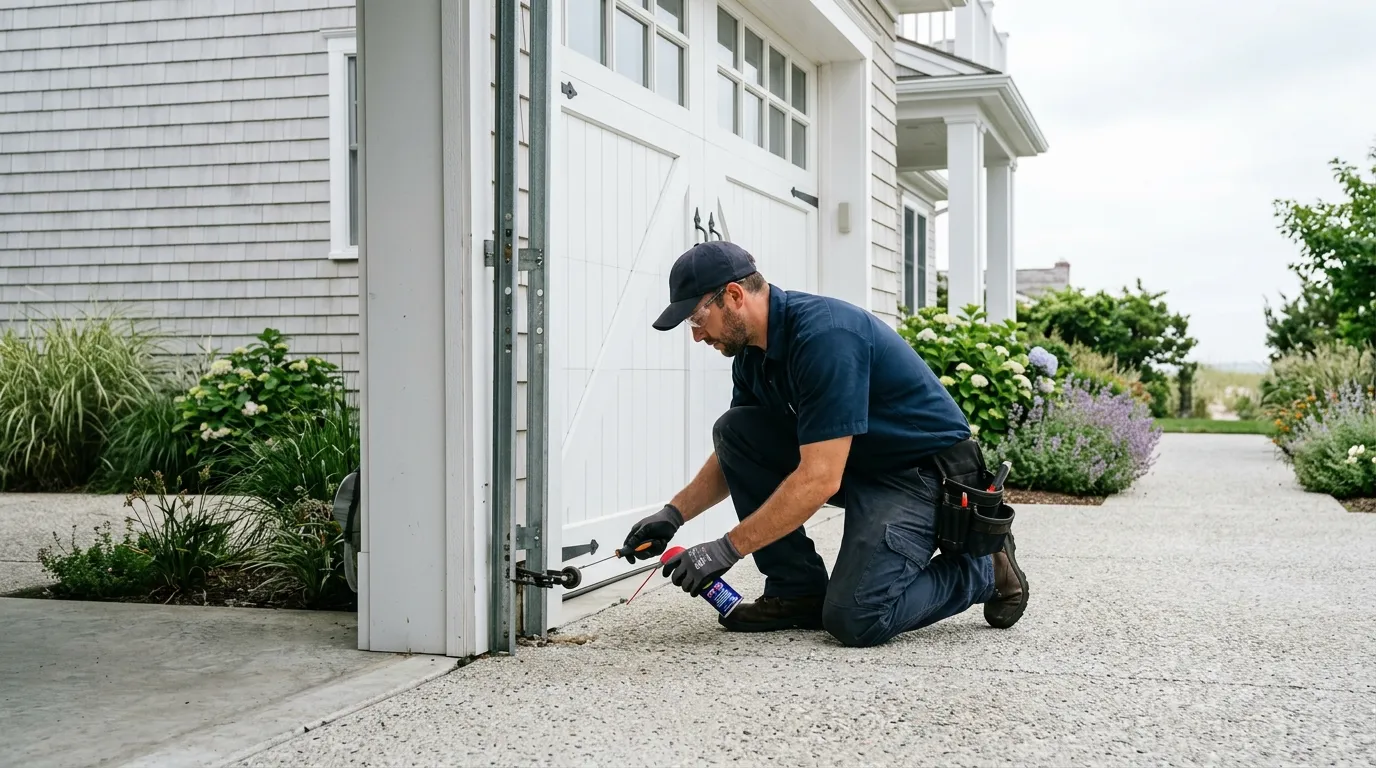
Garage Door Repair
Springs, cables, tracks, rollers, and openers fixed by a tech who explains the problem before touching anything.
Learn more →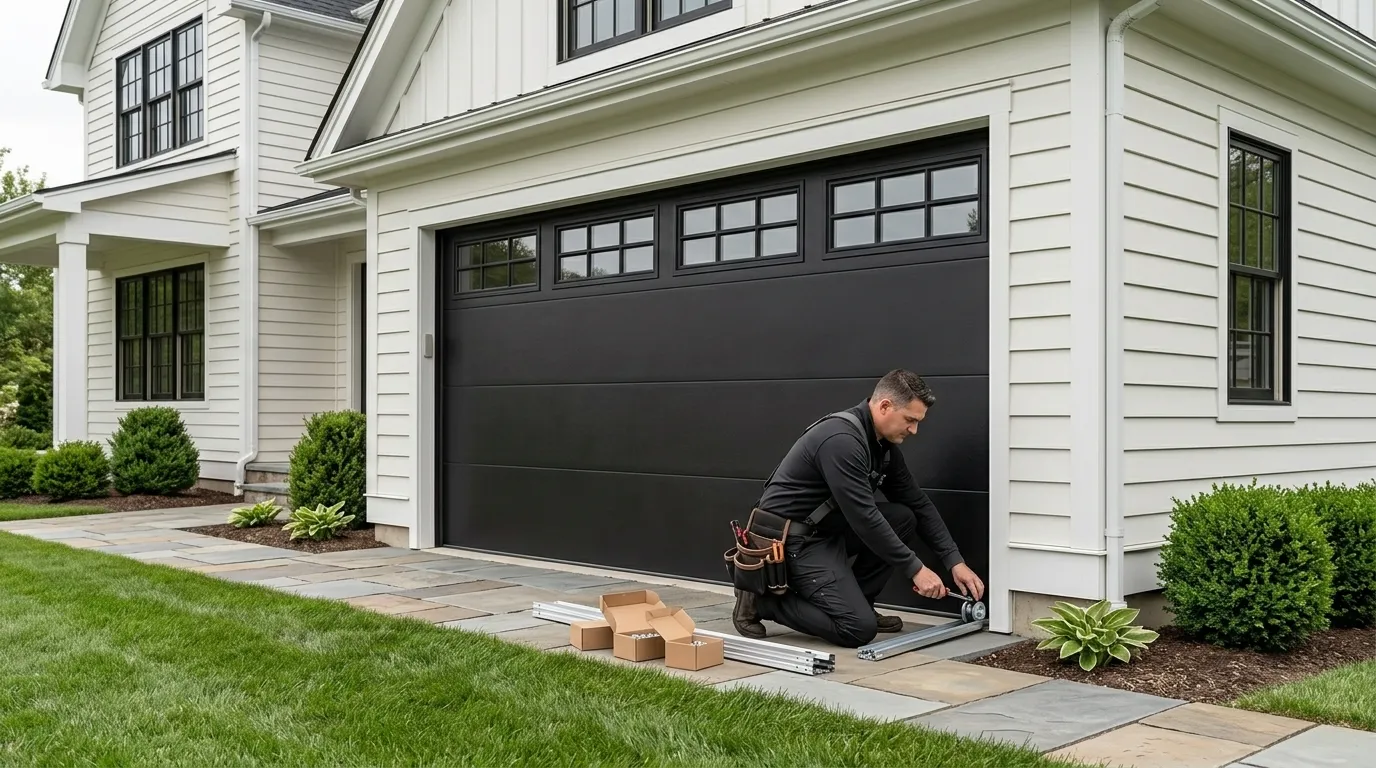
Garage Door Installation
New sectional doors sized and installed for the housing stock actually built in this area.
Learn more →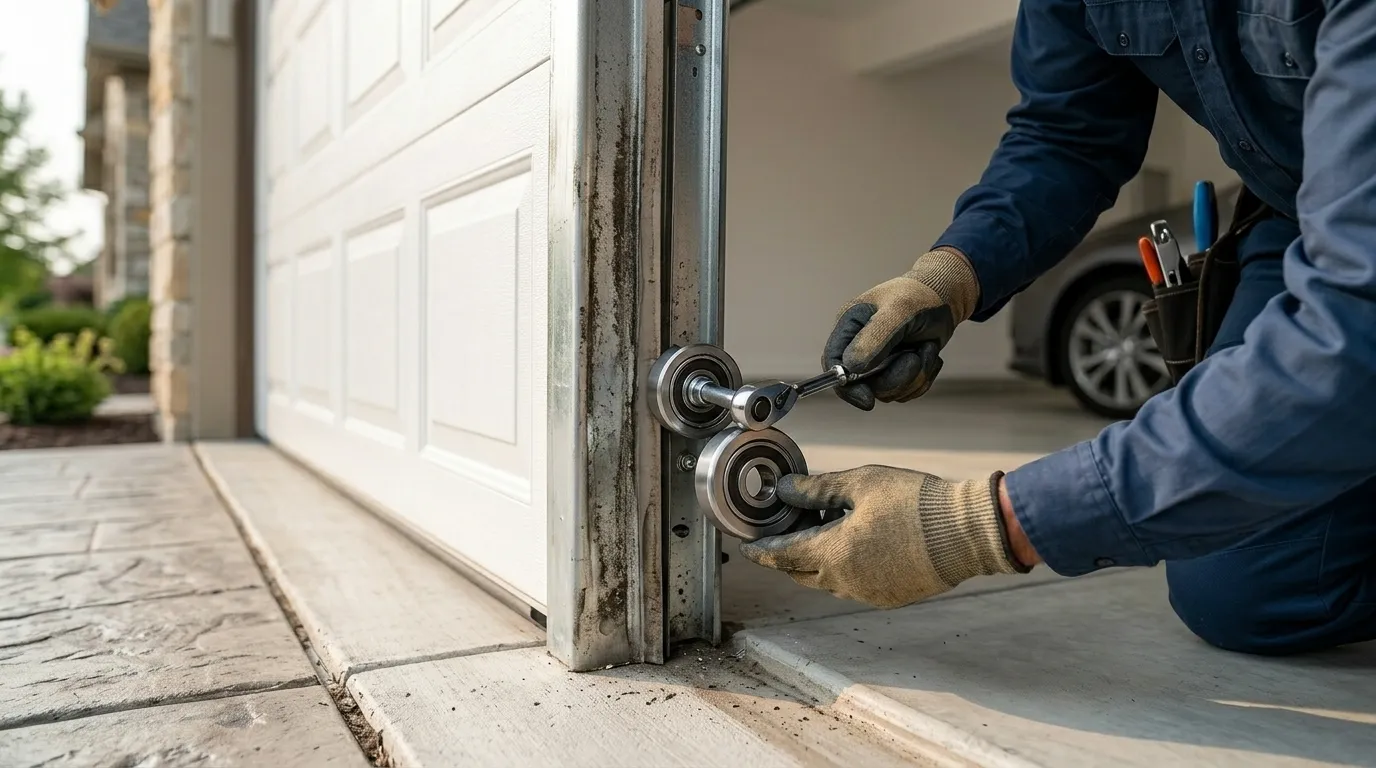
Garage Door Service
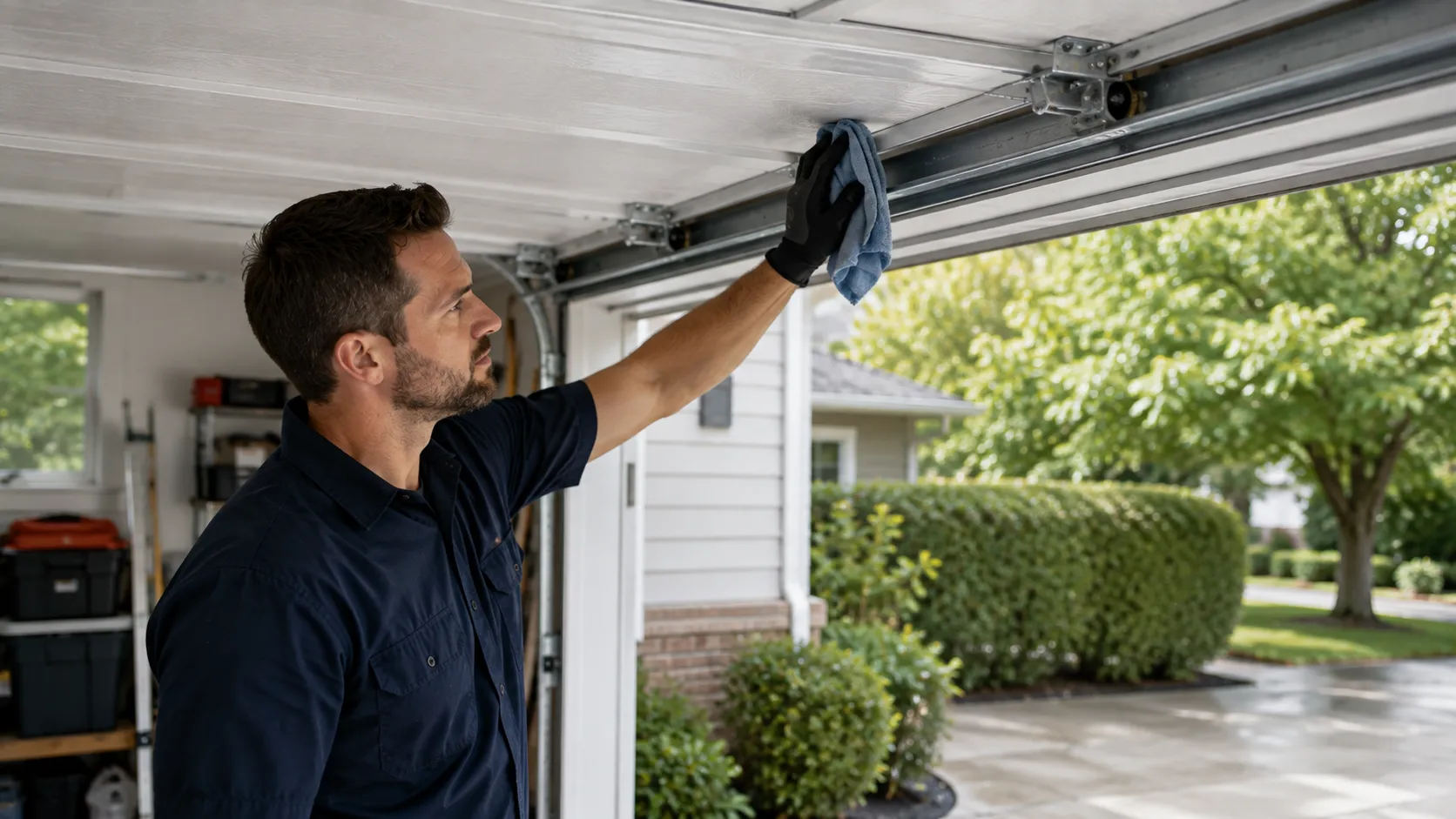
Tune-ups, lubrication, and safety checks that catch a small problem before it becomes a service call.
Learn more →Frequently Asked Questions
My garage door only makes noise in the winter - is that a real problem?
Often it's the cold acting on stiff grease and hardened weatherstripping rather than new damage, since this area sees a real freeze-thaw cycle each winter. But if the noise is new this year and didn't happen last winter, have it looked at - cold can also be what finally breaks a spring that was already fatigued.
Is a grinding noise from an old door dangerous?
A worn roller grinding as the door travels isn't an immediate safety issue, but it means the roller is close to failing outright, which can let the door drop unevenly. On houses from the 1960s and 70s that still run original-era hardware, a grinding roller is usually the first sign that other original parts are close behind.
Why would a repair on my older door take longer than expected?
Some hardware from houses built in the 1938-1996 range, especially the older end, isn't a size stocked on the truck or at most suppliers, so it has to be special ordered. We'll tell you upfront if a part falls into that category rather than guess at a timeline.
Have a Door That Needs a Second Opinion?
Call and describe what it is doing - we will tell you what it likely is.