
Glenview Garage Door Guide
How Wind Loads a Wide Garage Door in Glenview
Glenview's older two-car doors flex more in wind than newer ones. Here's what the housing stock and cold climate mean for your panel, track, and spring.
- Licensed & Insured
- Same-Area Service Calls
- Upfront Pricing
Checking It Yourself
Stand across the driveway on a gusty day and watch the panel, not the door as a whole. A wide double door that's flexing will show a visible bow in the middle section, sometimes an inch or more, and it'll pull back flat when the gust drops.
That flex is the tell. Run your hand along the horizontal seams between panels - if you feel a ridge that wasn't there last year, the steel is starting to work-harden at the bend.
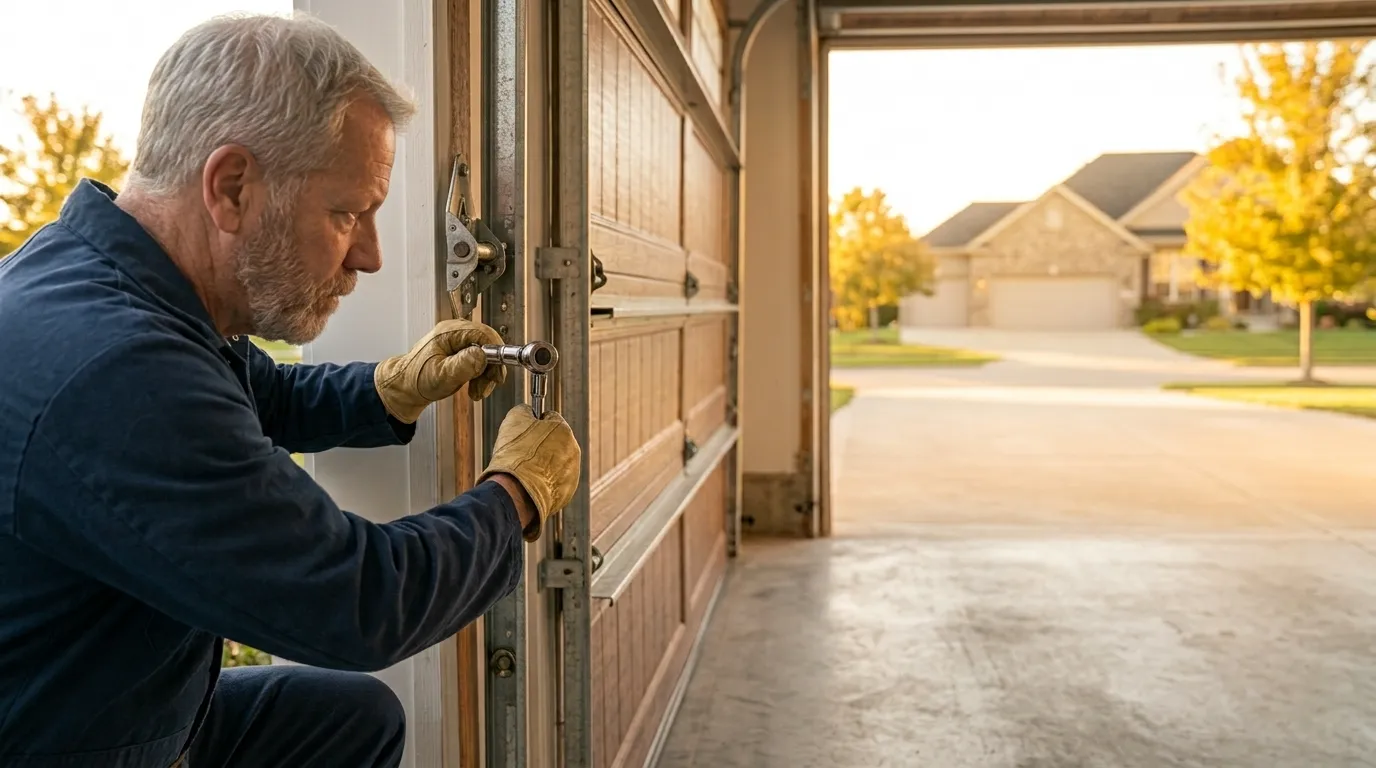
Check the track brackets next. On a lot of Glenview's older stock, brackets were lag-bolted straight into jamb studs with no reinforcement plate behind them.
Wind pressure on a wide door transfers straight through those brackets, and over time the wood around the bolts chews out. Wiggle the bracket by hand - any play at all means the fasteners are working loose, not just cosmetically.
Last thing: open the door partway and look for daylight along the sides. If your door was installed when the house went up, chances are there's no wind strut running horizontally across the back of the panel, and that's the piece that keeps the middle from bellying in under load. Its absence isn't a defect - it just wasn't standard when the door went in.
What the Weather Here Does to It
Glenview sits in a cold moderate climate band, which means winter here isn't brutal but it isn't mild either - the door goes through real freeze-thaw cycles most years, not just one or two. Steel doesn't like that. A panel that's already taking wind load flexes more easily once the finish has gone brittle from repeated cold snaps, and the baked-on coating starts hairline cracking right along the same seams that bow.
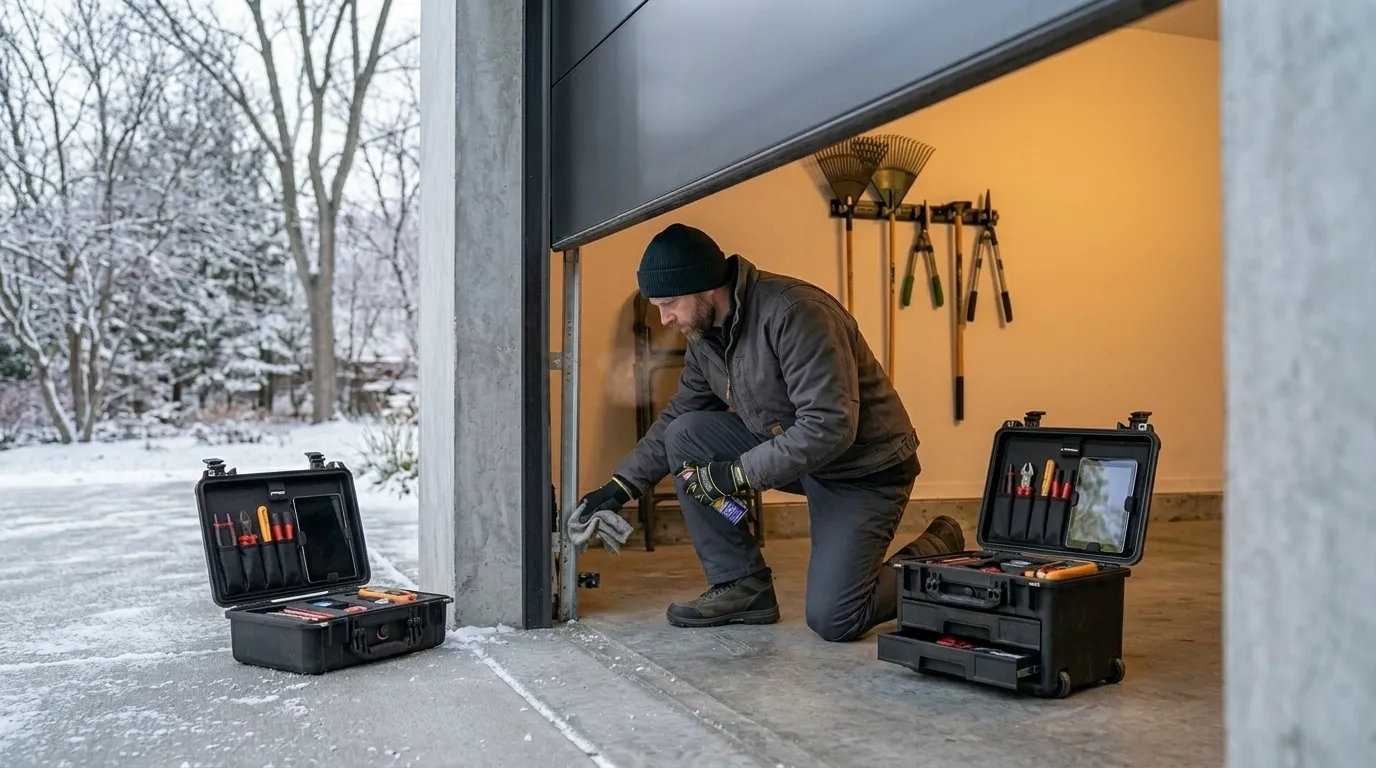
Cold also thickens the grease in the rollers and hinges, so the door doesn't ride the track as smoothly on the first push of the morning. That stiffness matters more on a wide door than a narrow one, because it takes more force to get moving, and more force means more strain on hardware that's already older.
The practical effect: a windy day in warmer months might just rattle the door, but the same wind pressure in January, on a door whose track and rollers are cold-stiff, is what actually walks a bracket loose or knocks a panel out of its track guide. It's the combination - not either one alone - that does the damage.
The Problem
Glenview's housing stock runs from 1938 to 1996, with a median build year of 1968, and most of the roughly seventy named areas that make up the town built out in the 1960s and 70s. That era is when the wide, two-car garage door became the standard build on new houses here. It's also before wind struts, reinforced end stiles, and heavier-gauge steel were common on residential doors - those came later as codes and manufacturer standards changed.
So a large share of the doors still in service on original hardware around Glenview are wide panels without the internal bracing that a door built today would have, running on torsion springs and track sized to an older, lighter-duty standard. That's not a flaw in how they were built - it's just what the door market offered when your house went up. The mismatch shows up now because these doors are 50-plus years into a design life that didn't anticipate today's replacement-door engineering.
The honest limit here: we can shim a bracket, add a strut, or true up a track, but we can't retrofit 1968 door steel to behave like 2024 door steel. Past a certain point of flex damage, the fix is a new door, not a patch.
When to Call Someone
Call if the bow you see in the panel doesn't fully flatten out once the wind drops - that means the steel has taken a permanent set, and it'll only get worse with the next gust. Same if the opener starts straining or reversing on a windy day when it ran fine yesterday; that's usually the door binding against a track that's shifted, and running the opener against it repeatedly can burn out the motor.
Also call if you notice a bracket has pulled partway out of the jamb, or if a roller has jumped the track. Both of those are quick fixes if caught early and a much bigger job if the door comes down off the track entirely.
What we won't do is talk you into a full door replacement if a strut and a bracket reset will hold for years - plenty of these older doors are structurally fine once braced properly. But if the panel steel itself has fatigued from repeated flexing, replacement is the honest answer, not another patch that'll fail again next windy season.
How We Can Help
Garage Door Repair
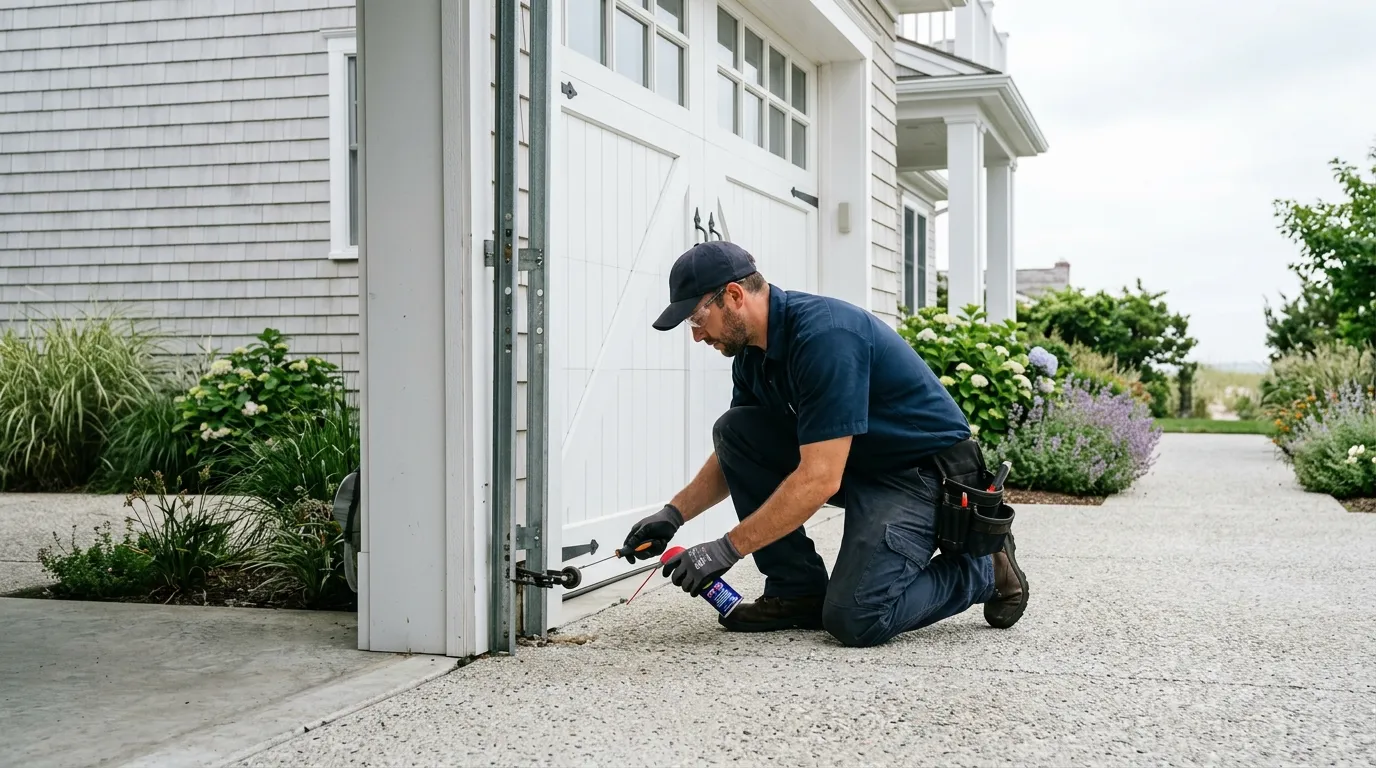
Springs, cables, tracks, rollers, and openers fixed by a tech who explains the problem before touching anything.
Learn more →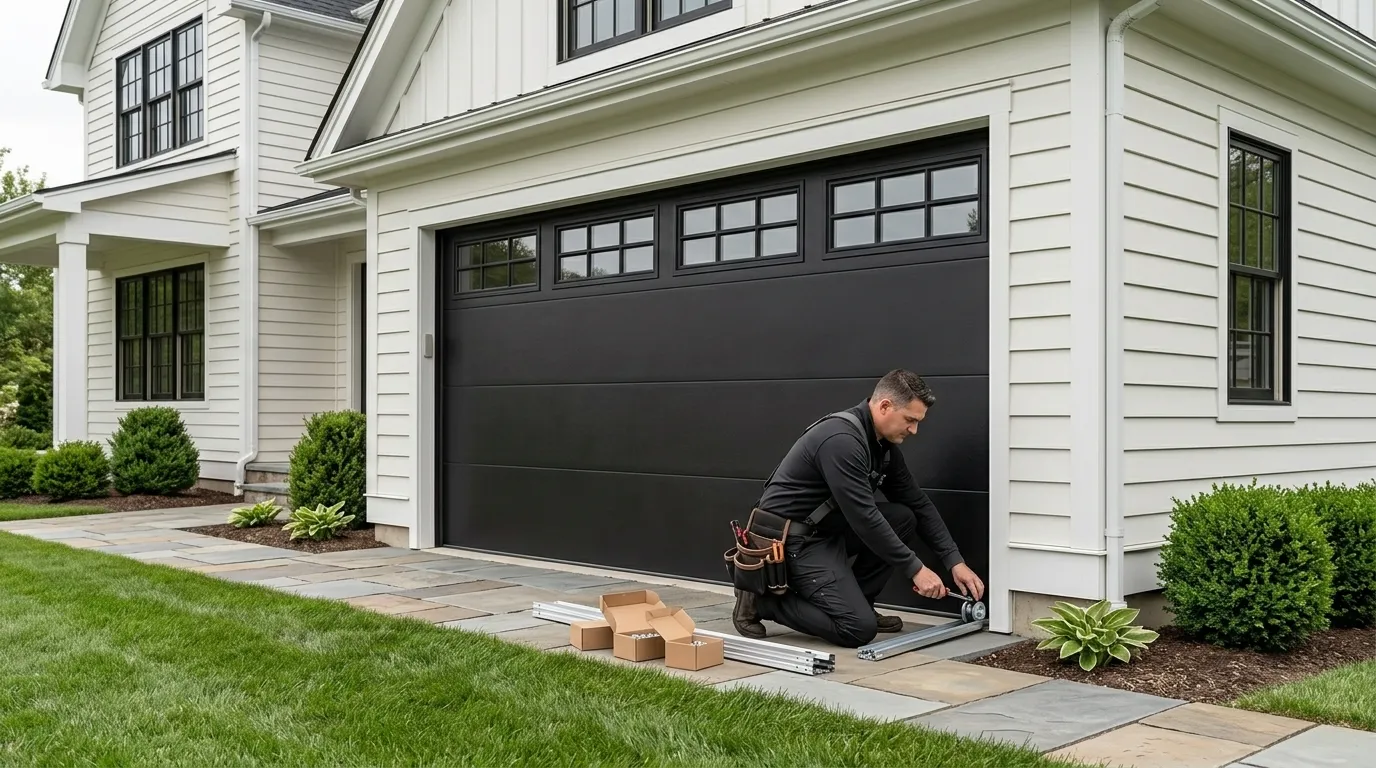
Garage Door Installation
New sectional doors sized and installed for the housing stock actually built in this area.
Learn more →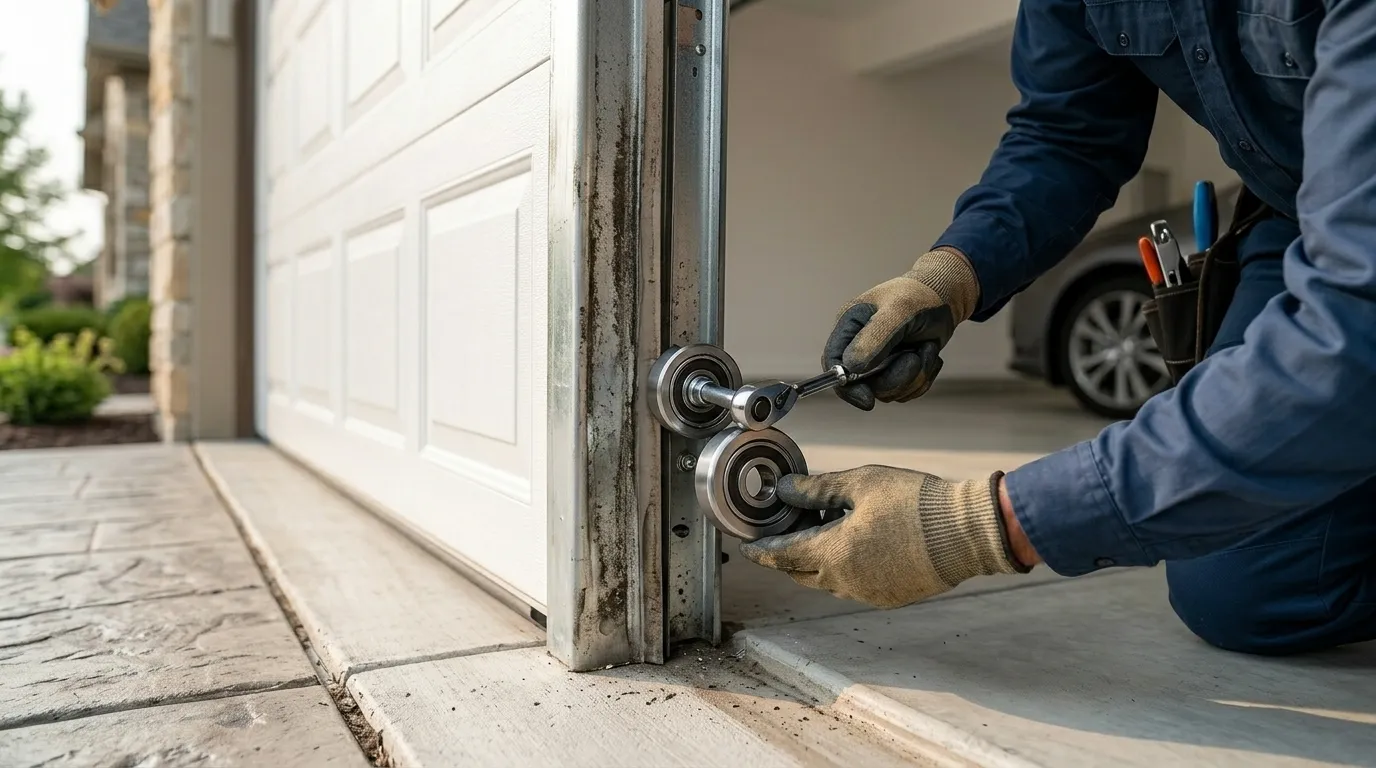
Garage Door Service
Tune-ups, lubrication, and safety checks that catch a small problem before it becomes a service call.
Learn more →Frequently Asked Questions
Why does my wide garage door bow in the wind but my neighbor's narrower door doesn't?
Width is the main factor. A wide two-car door has more unsupported panel area between the tracks, so wind pressure has more surface to push against with less steel bracing behind it, especially if it's an older build without a horizontal wind strut across the back.
Is this a problem with all older Glenview garage doors?
Not all, but a lot of doors installed when the house was built - and Glenview's stock runs 1938 to 1996 with a median around 1968 - predate common wind-strut bracing. Whether yours has it depends on when the door itself was last replaced, not just the house age.
Does the cold make the wind damage worse?
Yes. Cold stiffens roller grease and makes the door's steel and finish more brittle, so the same wind load that would just rattle the door in summer is more likely to crack the coating or work a bracket loose in winter.
Can I just add a strut myself to fix the bowing?
You can buy strut kits, but fitting one correctly means matching it to the panel and getting the fasteners into solid backing, not just the thin skin. If it's put on wrong it won't do much. Worth having someone check the panel condition first anyway.
Have a Door That Needs a Second Opinion?
Call and describe what it is doing - we will tell you what it likely is.