
New Door Installation in Libertyville
Installing a New Garage Door in Libertyville, IL
Most Libertyville garage doors date to the mid-1970s, with original hardware still in place. See what a new door costs and how scheduling works from Glenview.
- Licensed & Insured
- Same-Area Service Calls
- Upfront Pricing
What Happens When You Call
-
1
Call or Request a Quote
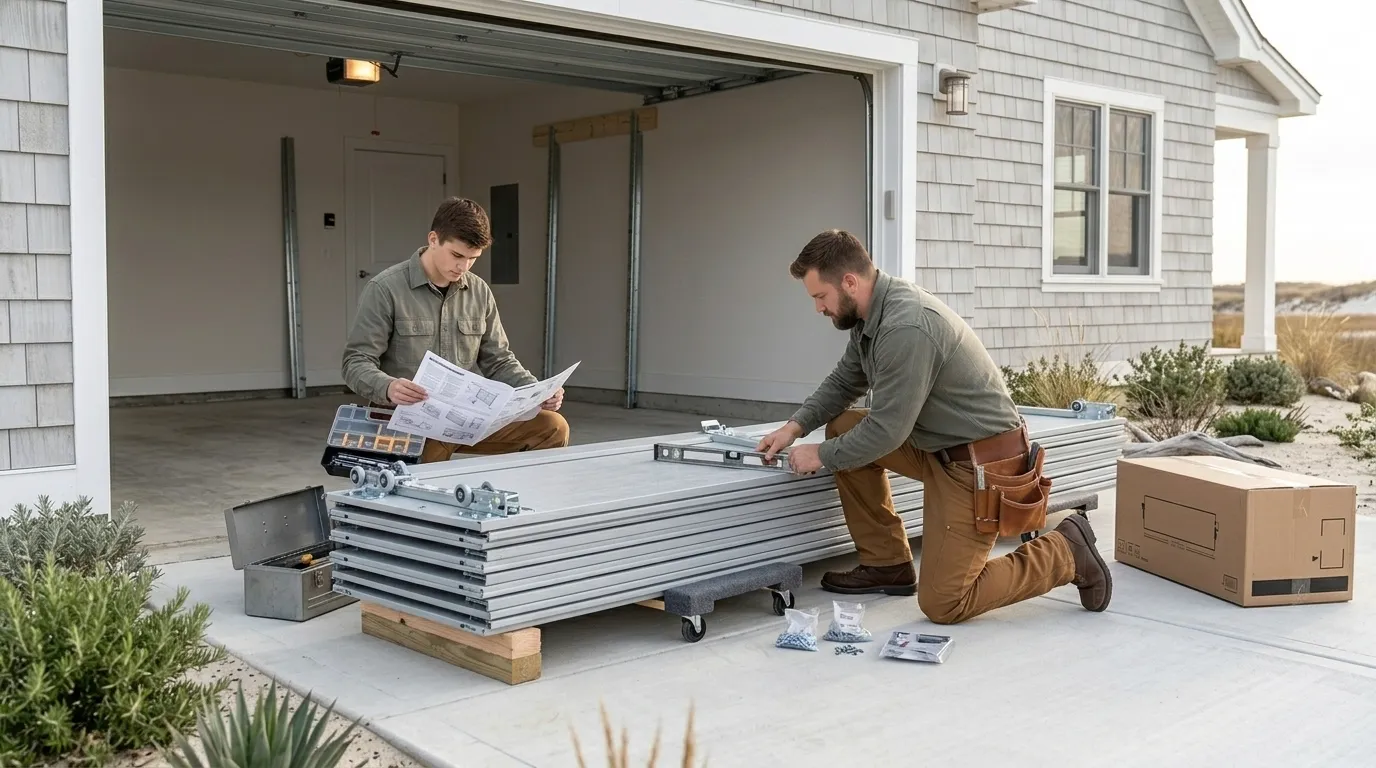
Tell us what the door is doing and roughly how old the house is - that alone points us toward the likely part before a truck leaves.
-
2
On-Site Diagnosis
A tech checks the spring, cables, tracks, and opener in person and tells you plainly what is actually wrong.
-
3
Straight Price, No Surprises
You get a number before any work starts. It covers parts and labor, nothing added after the fact.
-
4
Fixed the Same Visit
Most repairs are done in one trip. If a part needs sourcing, we tell you that upfront instead of guessing.
The Cost of This Job
Most of the original garage door hardware in Libertyville homes dates back to right around 1976, the town's median build year. That's a full eight years newer than the median build year across our whole service area, 1968, so the springs, rollers and tracks you're replacing here haven't quite hit the sixty-year mark that some older Glenview-area houses are approaching. Still, a torsion spring rated for that era's lighter steel doors is well past the cycle count it was built for, and the opener - if it's original - almost certainly predates today's safety-reversal standards.
Cost on a new install depends on what's underneath the door you have now: track width, header clearance, and whether the opening needs new jamb material to seat a modern insulated panel. We don't have a flat number to quote here because every one of those varies house to house, and quoting one anyway would be a guess dressed up as a fact.
One number worth knowing: median household income in Libertyville runs $162,270, well above the $104,478 median across our territory. That doesn't set your price, but it does explain why insulated steel and composite-overlay doors, rather than the cheapest single-layer panel, are the doors we install most often once we get out here.
Why It Happens Here
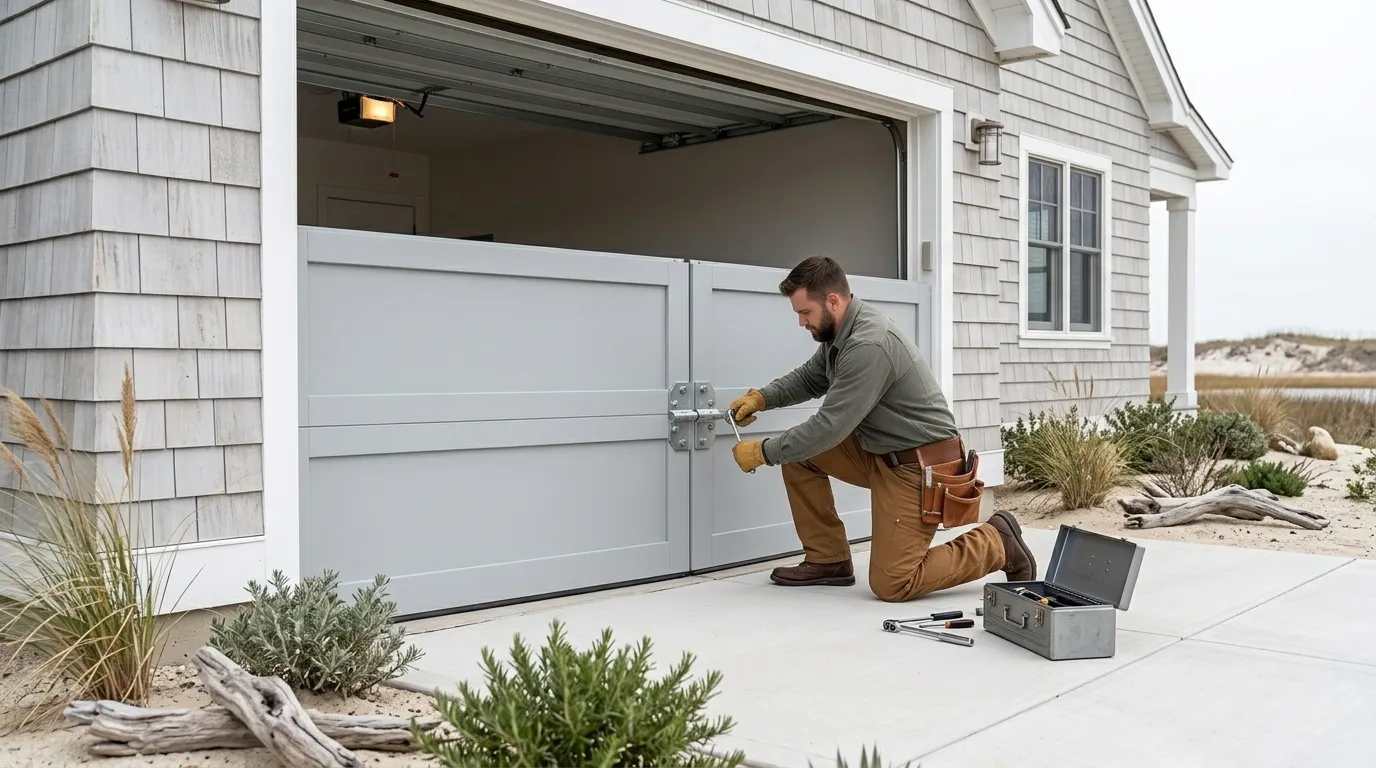
Libertyville's housing stock clusters tightly around that 1976 median, which means a lot of the neighborhoods went up within a few years of each other - same builders, same door hardware runs, aging out at close to the same time. When one house on a block needs a new spring or a new opener, the one three doors down usually isn't far behind.
The doors from that era were built for garages that weren't insulated living space. Ours is a cold-moderate climate band, and a lot of these original doors have no insulation value at all - just a single skin of steel over an empty cavity.
That was fine for a detached garage in 1976. It's a lot less fine once someone finishes the space above it or runs a chest freezer against the back wall, which is common enough now that we see it on nearly every other call out this way.
The other wear pattern is simpler: galvanized lift cables and painted-steel track from the 1970s don't hold up to fifty years of Midwest winters the way today's zinc-coated hardware does. By the time a homeowner calls, the cable is usually frayed past the point of a spot repair, not just loose.
The Symptom
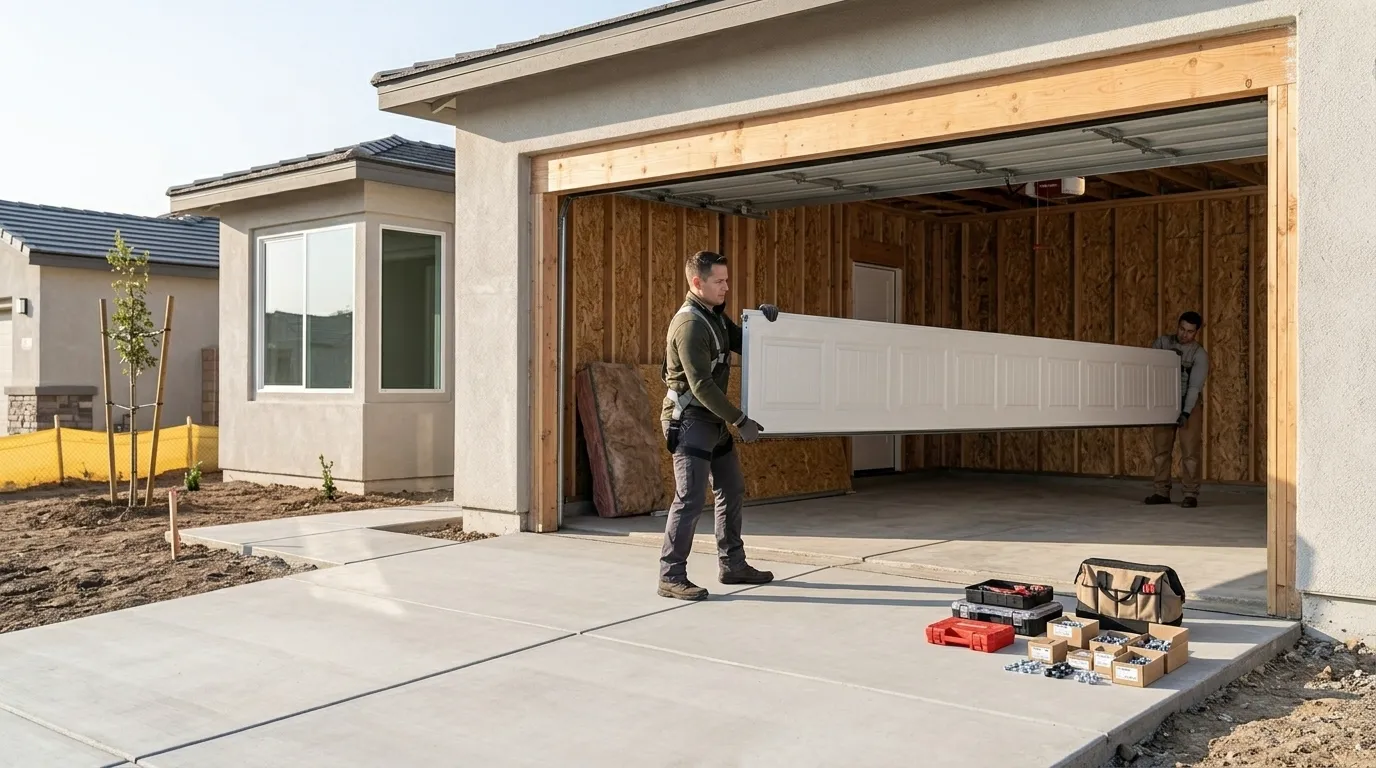
The complaint we hear most from Libertyville calls isn't a door that won't open - it's a door that opens crooked, slams the last six inches, or takes two tries on the opener before it catches. That's a torsion spring that's lost tension unevenly, or a cable that's stretched more on one side than the other. Neither is a job you patch and forget; once one spring goes, the other is close behind, and running a new door on one old spring is how you end up cracking a bottom panel.
On the newer end of Libertyville's stock, the complaint is different: the door works fine, but the garage is noticeably colder than the house wants it to be, especially the room above it. That's not a repair. That's the original uninsulated 1970s panel doing exactly what it was built to do, and the fix is a new door, not a new spring.
We won't sell you a spring job when the door itself is the problem, and we won't sell you a full replacement when a small part would've solved it. Telling those two apart is most of what this call is.
How Long You Are Without the Door
We run this job out of Glenview, about 16 miles south of Libertyville, so there's no local branch stocking spare panels on this side of the county. For a standard-size door in a common style, that's rarely a problem - we carry what fits most 1970s-era openings on the truck. For a nonstandard width, an odd header height, or a custom panel color, the part has to come from the distributor, and that lead time is the honest limitation here: it can add several days to the schedule that a stock door wouldn't need.
The install itself, once material is on site, is a same-visit job for a single door. What stretches the timeline in Libertyville specifically is almost always the ordering step, not the drive or the labor. If you know your opening is an unusual size, telling us that when you call saves a second visit and keeps you from waiting on a truck that has to turn around.
How to Book
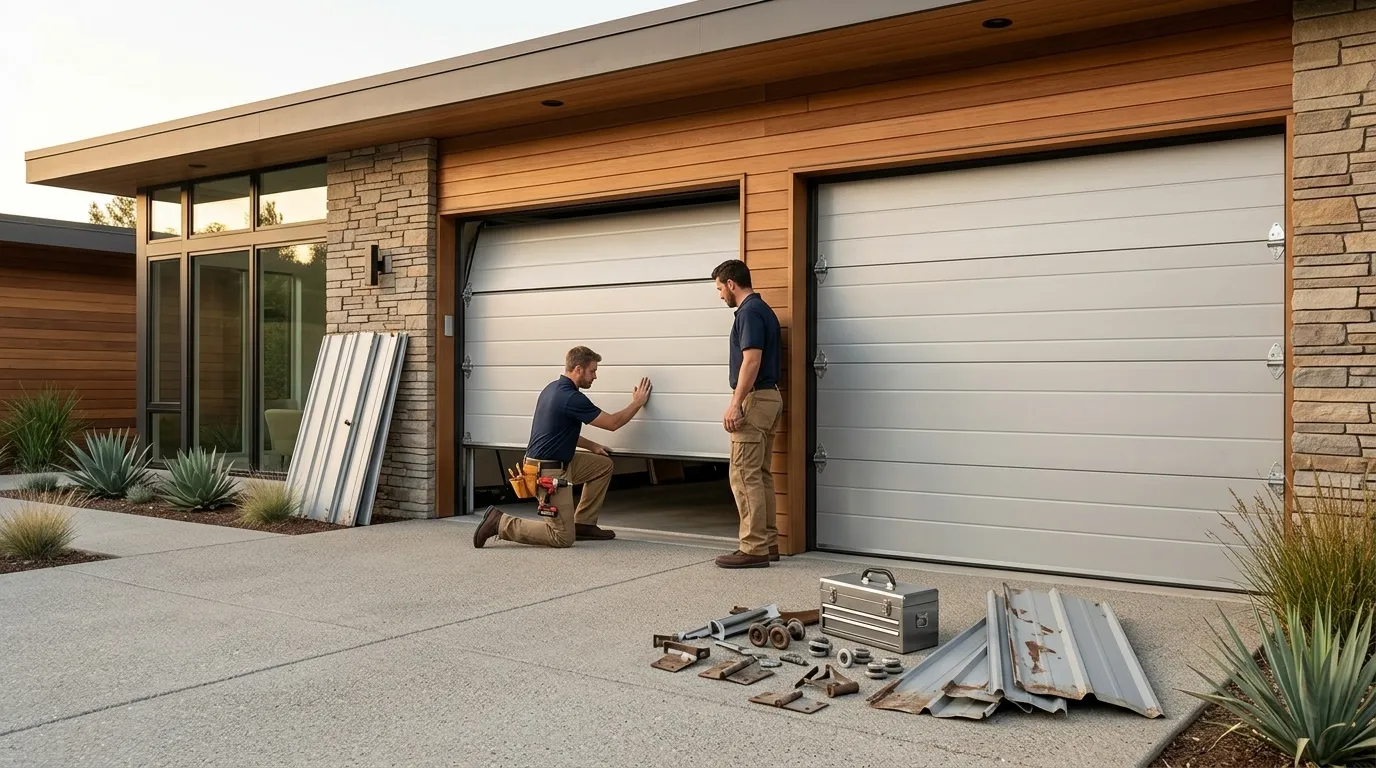
Booking starts with a look at what's actually there now - track type, header clearance, whether the opener is original, and whether the opening is a standard size for a 1970s-era garage. That's what actually decides material cost and lead time, not a phone estimate that skips the measurement.
You can see what we cover in Libertyville on our local page, and if you want the fuller rundown of installation work out of our Glenview shop - full-service coverage, other door styles, and general pricing structure - that's on the main installation page.
Either way, the call starts the same: a few questions about the door you have now, then a visit scheduled to measure before we quote anything. We'd rather send someone out with a tape measure than guess at a number over the phone and have it change once we see the opening.
Talk to a Libertyville Technician First
Describe what the door is doing and get a straight answer on what it likely needs.
Other Garage Door Services in Libertyville
Recent Work in Libertyville
A look at jobs our crew has been on nearby.
Why Libertyville Calls Us
Frequently Asked Questions
How old are most garage doors in Libertyville?
Libertyville's median build year is 1976, so a lot of houses still have their original door, spring, and track from that era. That hardware was built for a different steel gauge and a different opener safety standard than what's sold today, which is usually the first thing we flag on a visit.
Do you have a branch in Libertyville?
No. We run out of Glenview, about 16 miles south, and drive out for every job. Common door sizes are on the truck, but a nonstandard opening or a custom color has to come from the distributor first, which adds days to the schedule rather than hours.
Why is my garage so cold even with the door shut?
If the door is original to a 1976-era build, it's likely a single skin of steel with no insulation at all - normal for a detached garage back then, less so once the space above it gets finished. A new insulated door, not a repair, is usually the actual fix.
What if my garage door opening is an unusual size?
It happens, especially on older Libertyville builds with custom header heights. We measure before quoting so we know exactly what we're ordering, and we'll tell you upfront if the part needs to come from the distributor instead of off the truck.
Need New Door Installation in Libertyville?
Call now for straight answers on cost and timing.