
Service
Garage Door Cable Repair in Glenview
Broken or frayed garage door cables on Glenview's 1960s-70s housing stock. Same cold-climate wear pattern across the service area. Call for a cable repair.
- Licensed & Insured
- Same-Area Service Calls
- Upfront Pricing
What Happens When You Call
-
1
Call or Request a Quote
Tell us what the door is doing and roughly how old the house is - that alone points us toward the likely part before a truck leaves.
-
2
On-Site Diagnosis
A tech checks the spring, cables, tracks, and opener in person and tells you plainly what is actually wrong.
-
3
Straight Price, No Surprises
You get a number before any work starts. It covers parts and labor, nothing added after the fact.
-
4
Fixed the Same Visit
Most repairs are done in one trip. If a part needs sourcing, we tell you that upfront instead of guessing.
How Long You Are Without the Door
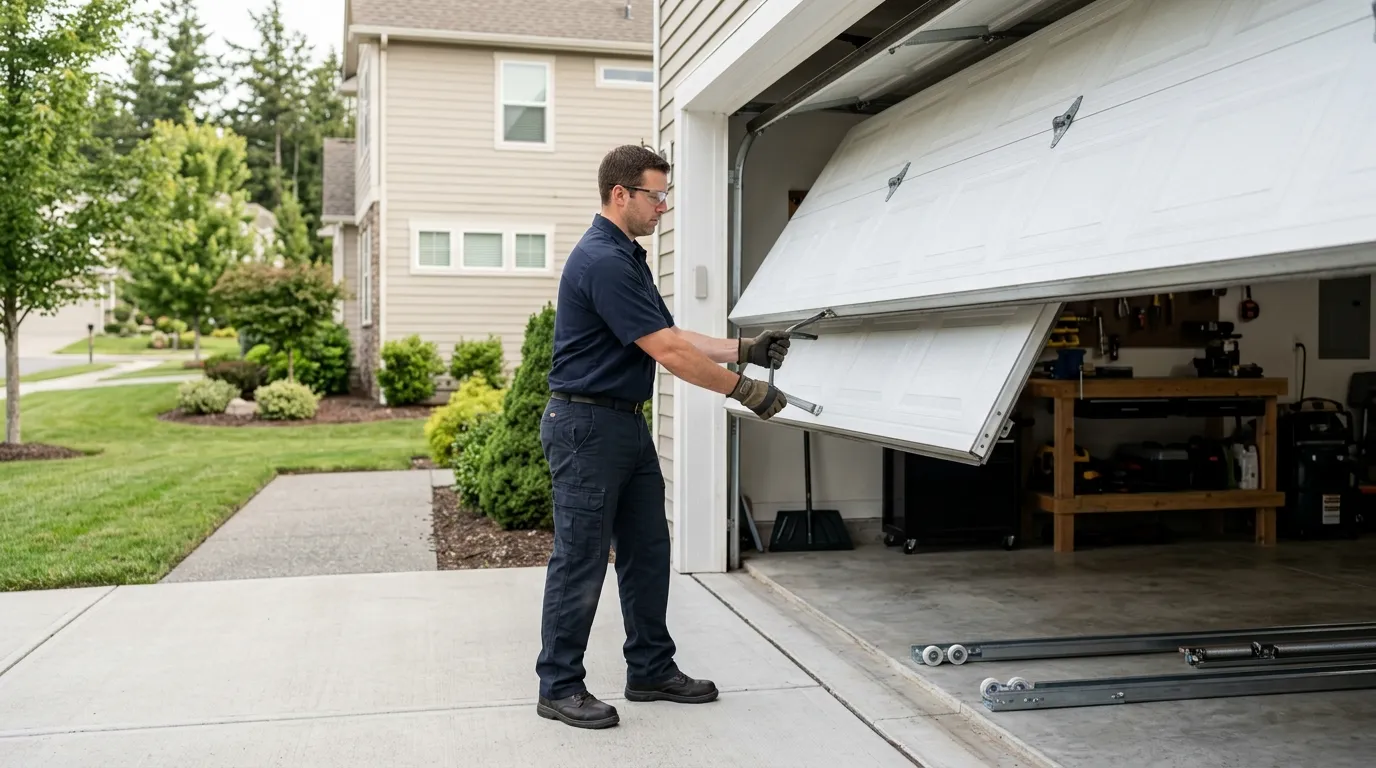
A snapped lift cable doesn't mean a new door, but it does mean the door is stuck until someone gets a fresh cable on the drum and re-tensions the spring against it. On most of the doors we see in this service area - homes built between 1938 and 1996, with the bulk going up in the 1960s and 70s - the cable, drum, and spring are all original-era parts working together, so pulling one cable off usually means checking the other side too. That's not a five-minute fix you do standing on a ladder with a flashlight.
Expect the door to sit closed (or open, depending on when it let go) until a tech gets there, tests the drums for wear grooves, and runs new cable to match the existing spring wind. If the opposite cable is close to the same age, it's worth replacing both in the same visit rather than paying for a second service call in a few months when it goes too. We carry standard cable stock on the truck for the sizes common to this era of door; anything oversized or a specialty commercial-grade cable may need to be ordered, which is the one thing that can stretch a same-day job into a next-day one.
Why It Happens Here
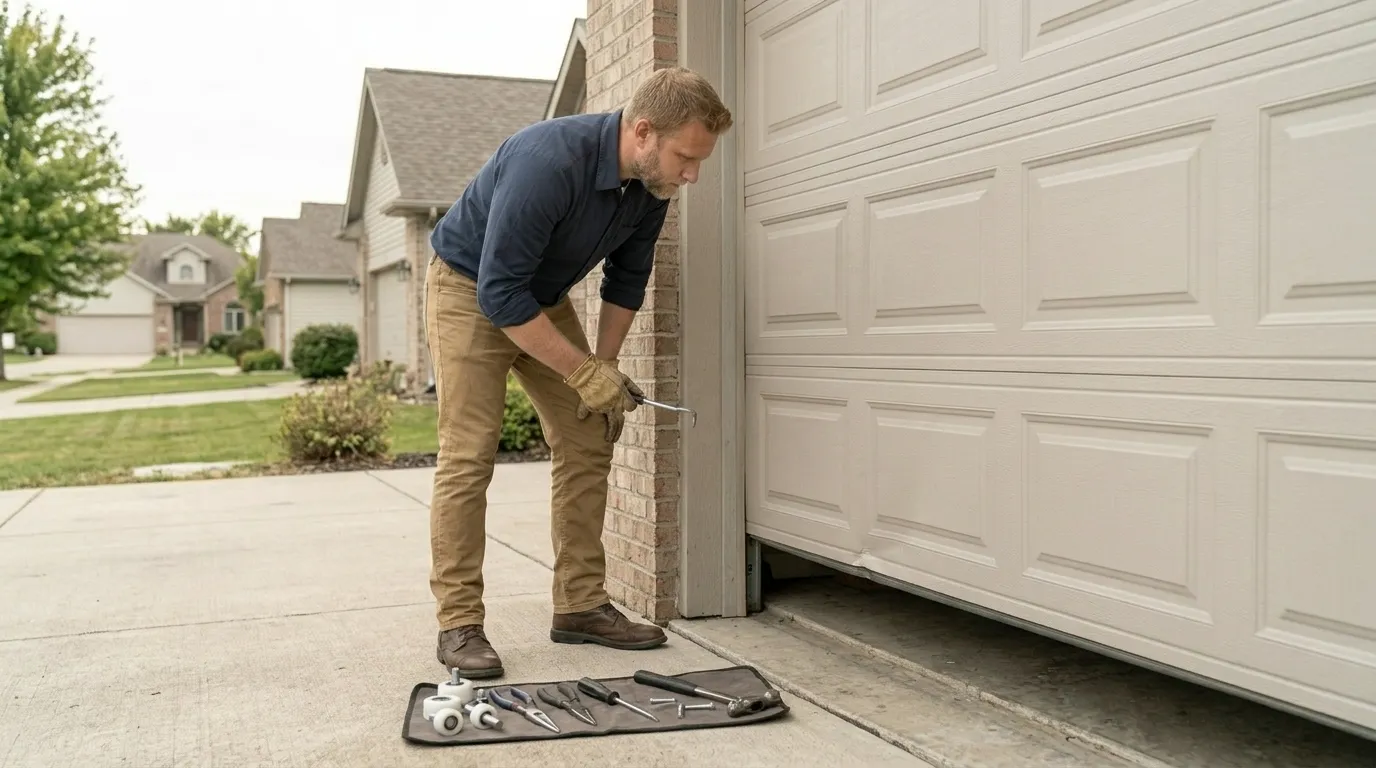
Lift cables fail from repeated flex fatigue, and two things speed that up in this part of the region: age and cold. Housing in the service area runs a median build year of 1968, which means a lot of garage doors are still on their original galvanized cable or a first replacement set that's now decades old. Zinc coating wears thin at the drum contact point over that many open-close cycles, and once a strand starts to fray it goes fast.
The moderate cold climate band this area sits in adds a second stressor: cable that's slightly stiff from cold temperatures doesn't seat on the drum grooves as cleanly, so it wears unevenly instead of laying flat. Combine 1960s-70s hardware with a winter that regularly drops below the temperature where steel cable stays flexible, and you get the failure pattern we're called out for most - a cable that was fine in September and frayed through by February. Newer doors with galvanized or vinyl-coated cable rated for wider temperature swings hold up longer, but a lot of the original stock in this area was never upgraded when the opener was.
The Symptom
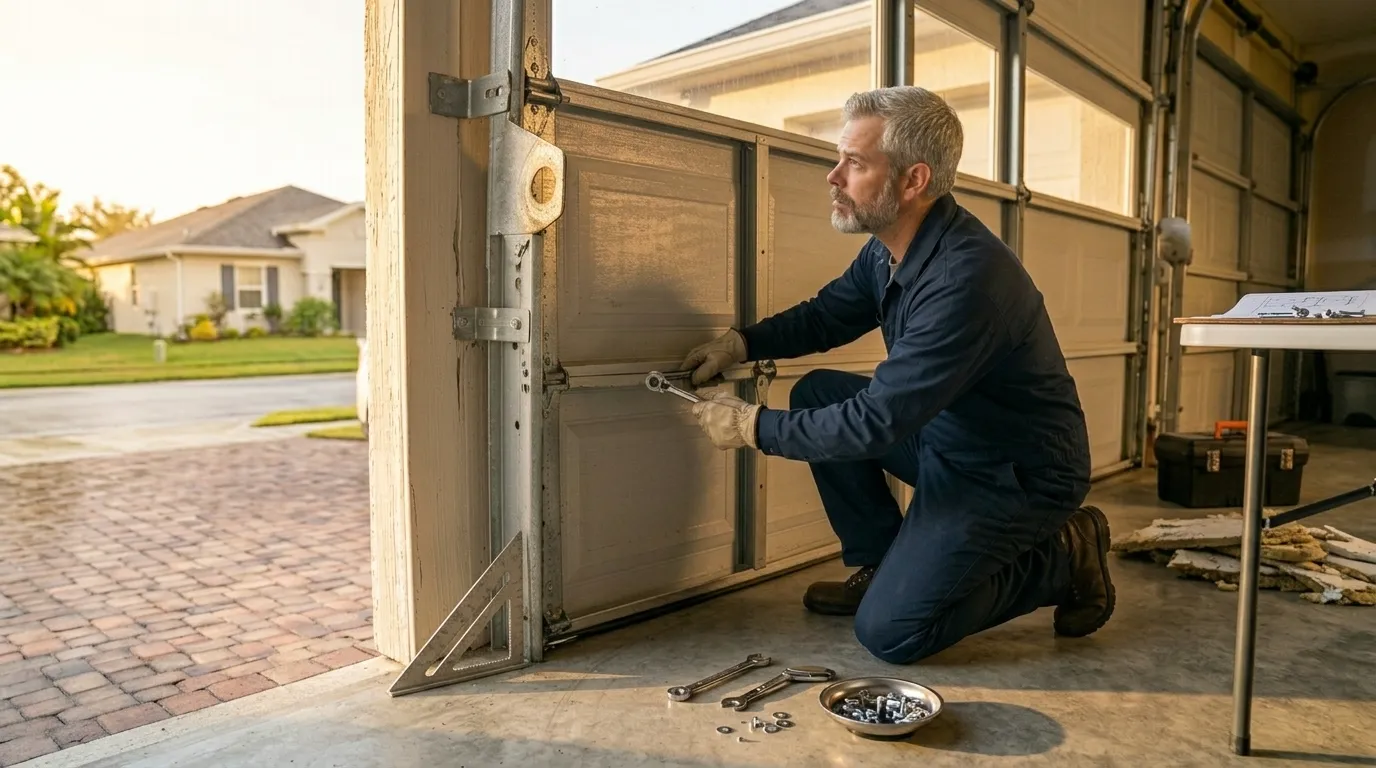
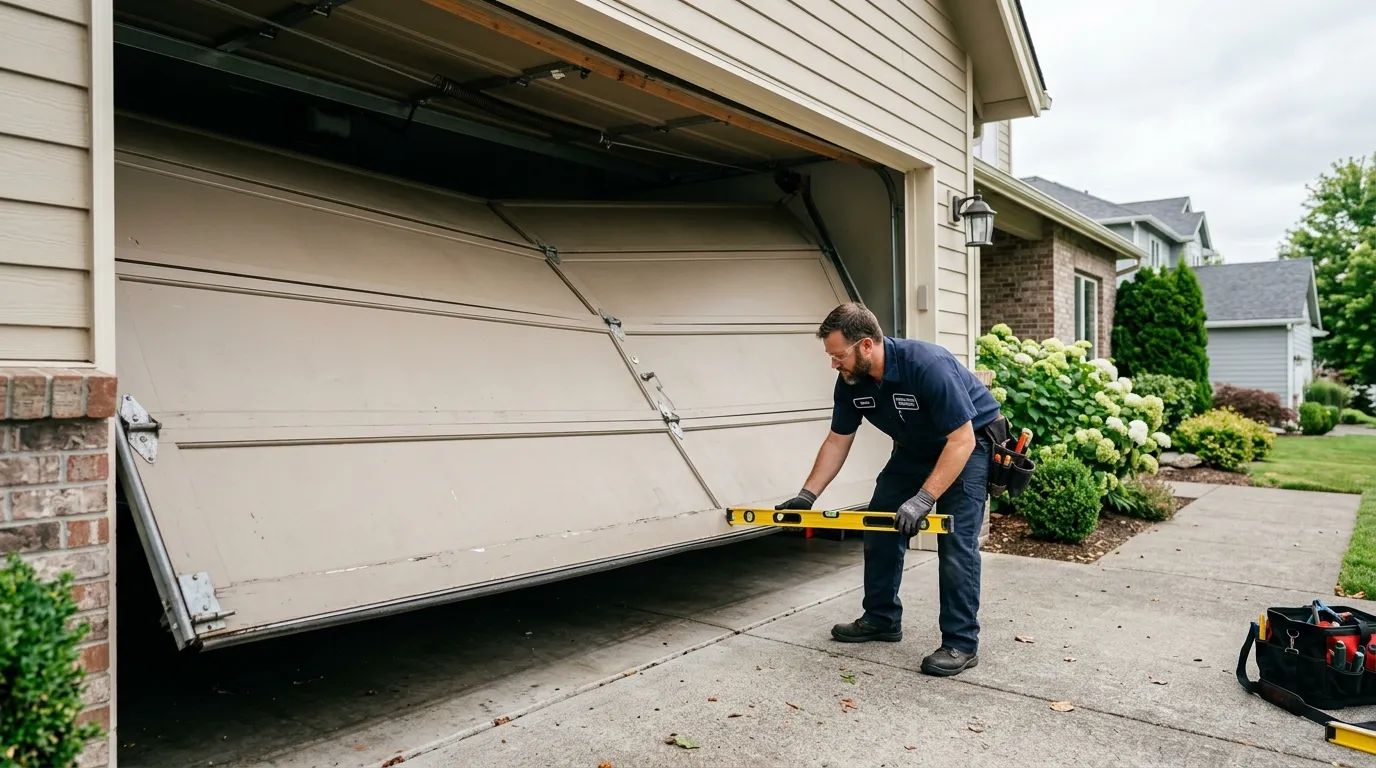
The tell is usually one side of the door hanging lower than the other, or the door racking sideways in the track as it moves - that's a cable that's stretched or partially given way on one drum while the other side is still holding full tension. Sometimes you get a loud bang and the door drops fast on one corner; that's a full snap, and if it happens while the door is open, the door can come down hard enough to warp a panel or bend a track. A cable that's fraying but hasn't gone yet often shows as a rough, jerky motion right near the top or bottom of travel, or a faint clicking as loose strands catch on the drum.
If you see bare wire strands sticking out anywhere along the cable, or rust bloom concentrated at one spot rather than evenly along the length, that's a cable close to failing, not one that's just cosmetically rough. Don't try to force the door with the opener once you see any of this - running a motor against a partially failed cable is how the other cable goes too, and how a spring lets go unexpectedly.
What the Repair Takes
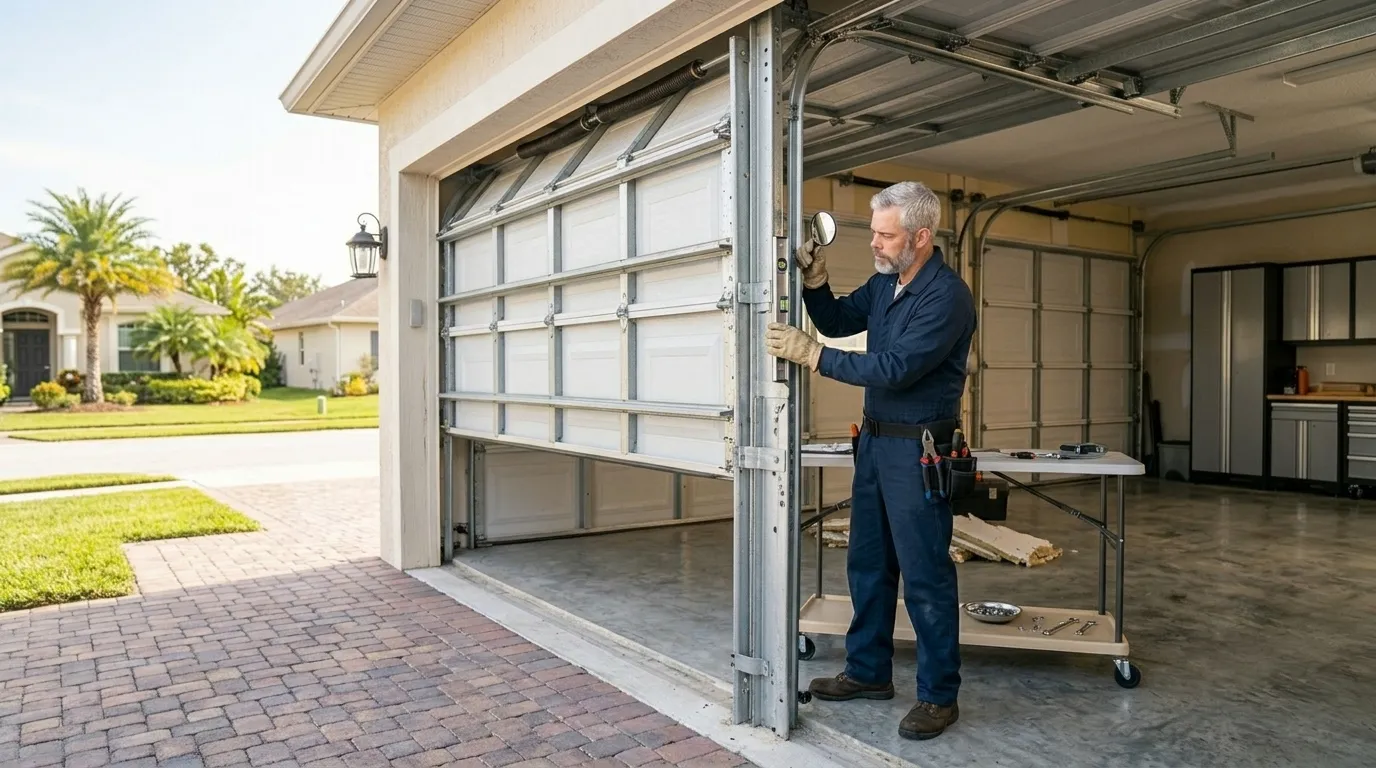
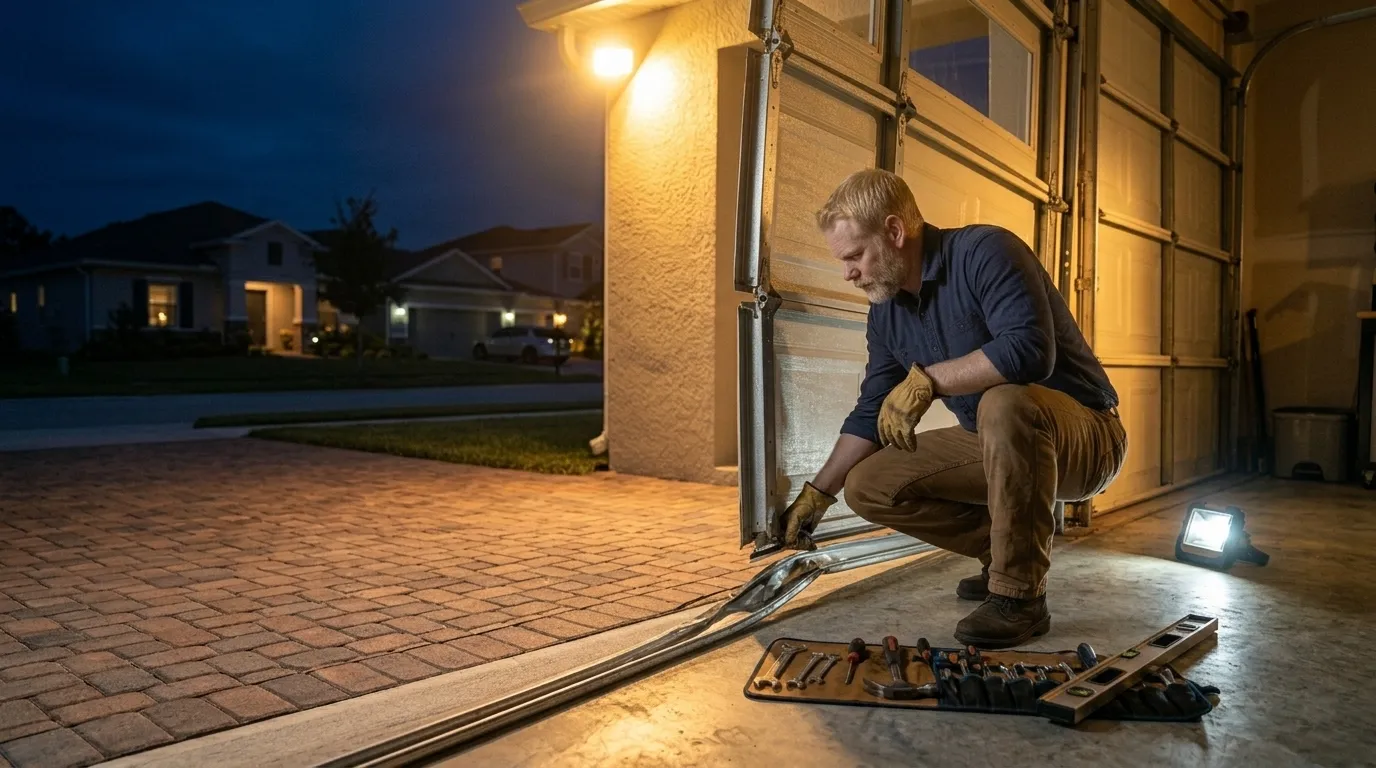
A standard cable replacement means releasing spring tension safely, pulling the old cable off both drums, checking the drums themselves for grooove wear (a scored drum will just fray the next cable), and running new cable sized to the door's weight and spring wind. On the double doors common across this area's 1960s-70s stock, that's usually a straight swap once the tension is off. Where it gets longer is when the drum is worn enough to need replacing too, or when the track has been bent by a partial drop and needs straightening or swapping before the door will travel smooth again.
We won't put a new cable on a door with a spring that's clearly near the end of its life - it's a waste of a return trip when the spring goes two months later, so we'll flag that during the same visit. Most cable jobs on a standard residential door finish in under an hour once the tech is on site, spring work and track repair on top of that add time depending on what's underneath.
Talk to a Technician Before You Book
Describe what the door is doing and get a straight answer on what it likely needs.
Jobs Like Yours
Recent work from this service line.
Why Glenview Calls Us
Frequently Asked Questions
Can I replace a garage door cable myself?
Not safely without letting the spring tension off first. The cable and the torsion spring work against each other, and disconnecting a cable while the spring is still wound is how people get hurt. If you're not set up with winding bars and a way to control the spring, it's not a DIY job.
Why did my cable snap in winter?
Cold makes steel cable stiffer, so it doesn't seat evenly in the drum groove and wears faster at whatever point it's rubbing. Combined with cable that's already decades old on a lot of the housing stock in this area, cold months are when a marginal cable finally lets go.
Should I replace both cables at once?
If they're the same age, yes. Cable on the side that hasn't broken yet is usually just as worn, and paying for one visit now beats paying for two visits a few months apart when the second one goes.
Will a bad cable damage anything else?
If the door drops hard on one side, yes - it can bend the track or rack a panel. That's why we tell people not to run the opener once they notice a cable issue, even if the door still seems to move.
Need Garage Door Cable Repair in Glenview?
Call now for straight answers on cost and timing.