
Service
Garage Door Maintenance for Glenview Homes
Glenview homes built between 1938 and 1996 carry original hardware that wasn't made for today's cold swings. Here's what maintenance actually needs to catch.
- Licensed & Insured
- Same-Area Service Calls
- Upfront Pricing
What Happens When You Call
-
1
Call or Request a Quote
Tell us what the door is doing and roughly how old the house is - that alone points us toward the likely part before a truck leaves.
-
2
On-Site Diagnosis
A tech checks the spring, cables, tracks, and opener in person and tells you plainly what is actually wrong.
-
3
Straight Price, No Surprises
You get a number before any work starts. It covers parts and labor, nothing added after the fact.
-
4
Fixed the Same Visit
Most repairs are done in one trip. If a part needs sourcing, we tell you that upfront instead of guessing.
How Long You Are Without the Door
A door that's been skipped on maintenance for a few years doesn't fail all at once. It fails on a morning you need it.
A dry roller starts binding in the track, the opener starts straining against a spring that's lost tension, and one cold snap later the door won't move at all. That's the difference maintenance makes: catching the roller before it locks up, not after.
On a straightforward maintenance visit - lubrication, hardware check, spring tension, opener sensor alignment - you're looking at a door that's back in service the same visit, not a day or two waiting on a part. The exception is when maintenance turns up something already broken, like a cable that's frayed past safe use. At that point you're waiting on the part, not the visit, and that timeline depends on what's wrong, not on the maintenance call itself.
We won't tell you a number we can't back up for every job, because a stuck opener board is a different wait than a worn roller. What we can tell you is that most maintenance visits in homes built in this area's common range never turn into a parts wait at all - they're preventing one.
Why It Happens Here
Most of the housing stock in this service area went up between 1938 and 1996, with the bulk of it clustered in the 1960s and 70s - median build year 1968. Doors and openers from that era, or replaced once since, were built to a different standard than what's sold today, and a lot of that original hardware is still doing the job it was installed to do decades ago.
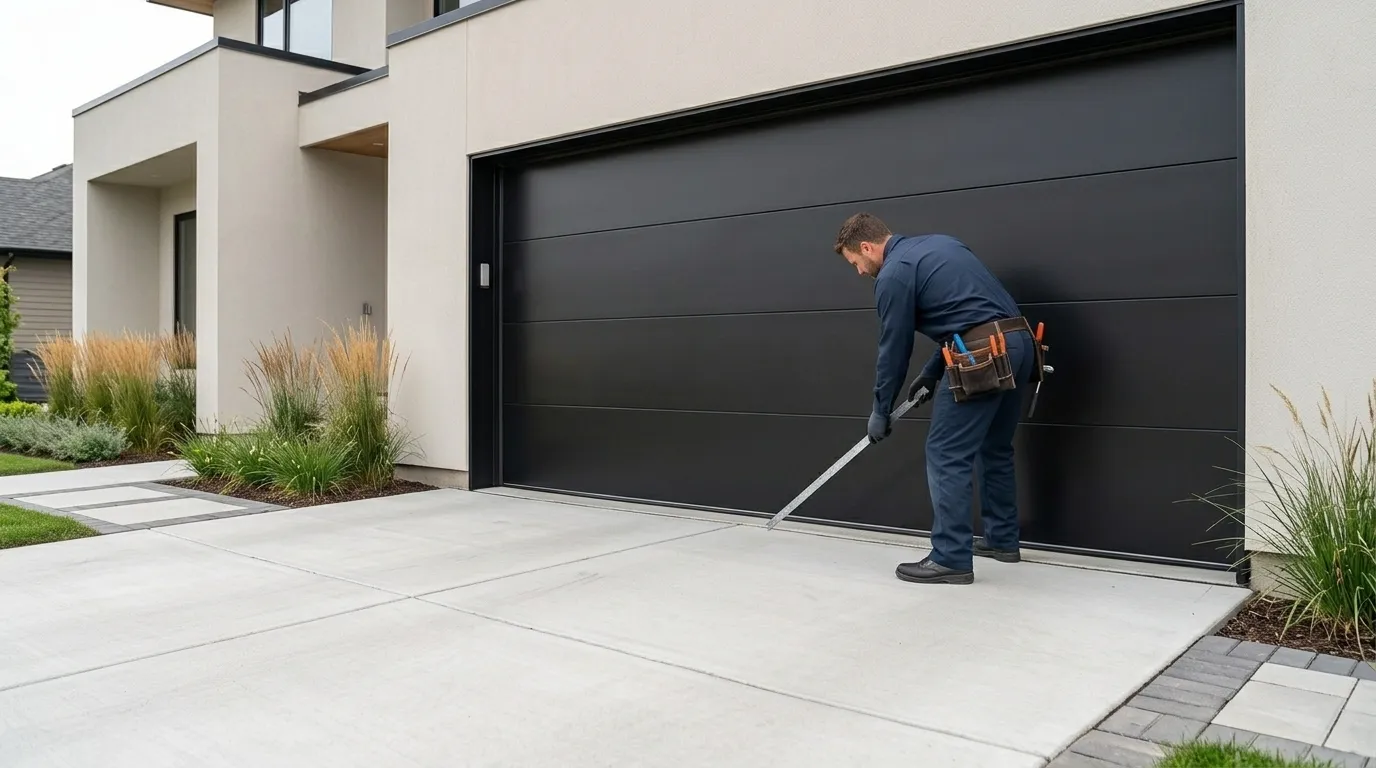
That matters because of what the region does to steel and lubricant. This is a cold-moderate climate band - real winter swings, not extreme cold, but enough freeze-thaw cycling every year to work moisture into springs, hinges, and track bolts that a milder climate wouldn't touch. Grease that's fine in July gets stiff in January, and a spring that's carrying a hair too much rust doesn't announce itself until it's under load in a cold garage.
So the failure pattern here isn't random. It's older torsion hardware paired with seasonal temperature swings, on doors that were never designed to be maintenance-free for fifty years. That combination is why a yearly check catches things that a newer door in a warmer climate might go a decade without needing.
The Symptom
The tell is almost always noise or hesitation before it's a full failure. A door that used to run quiet starts grinding on the way up.
The opener strains for an extra half-second before it catches. The door drifts a little crooked in the track instead of tracking straight top to bottom.
Each of those points somewhere specific: a dry roller grinding in an old steel track, a spring that's lost enough tension that the opener is doing work it shouldn't have to do, or track bolts that have loosened with years of thermal expansion and contraction. On the housing stock common to this area, it's usually one of those three, because the hardware is old enough to have earned the wear and the climate is consistent enough to have caused it.
What maintenance does is catch the symptom while it's still a sound and not a stuck door. A grinding roller gets lubricated or replaced before it seizes.
A spring that's down a few pounds of tension gets adjusted before it snaps. None of that is dramatic work - it's the kind of thing that's easy to put off, right up until the morning it isn't.
What the Repair Takes
A standard maintenance visit covers the moving parts that actually fail on doors this age: rollers, hinges, track alignment, spring tension, cable condition, and the opener's force and sensor settings. On a door with original or older hardware, that's usually a lubrication and adjustment job - nothing gets swapped unless something's already worn past safe adjustment.
Where it turns into a repair instead of a tune-up is when a component has already failed the tension or wear check - a spring that's stretched, a cable with visible fraying, a roller that's cracked rather than just dry. Those get flagged and priced separately, because replacement parts on an older door sometimes aren't the same size or mount as what's sold now, and that can change the job.
One honest limit: if a door's hardware is old enough that matching parts aren't readily available, sometimes the straight answer is that replacement costs less than chasing down obsolete pieces for a repair. We'll tell you that instead of running up a bill patching something that won't hold. Across the roughly 173,000 owner-occupied houses in this service area, that call comes up more often on the oldest end of the 1938-1996 range than on the newer end.
Talk to a Technician Before You Book
Describe what the door is doing and get a straight answer on what it likely needs.
Jobs Like Yours
Recent work from this service line.
Why Glenview Calls Us
Frequently Asked Questions
How often should a garage door in Glenview get maintenance?
Once a year is the baseline we'd give any door in this climate band, given the freeze-thaw cycling the hardware goes through every winter. If your door is on the older end of the local housing stock - original hardware from the 1960s or 70s - a yearly check catches wear before it becomes a stuck door on a cold morning.
Does maintenance fix a noisy door?
Often, yes. Grinding or squealing is usually a dry roller or hinge, and that's a lubrication fix during a standard visit. If the noise is coming from the opener straining against a weak spring, that's a tension adjustment, not a lubrication job - we'll tell you which one it is before doing anything.
Is maintenance worth it on an older door instead of just replacing it?
Usually, yes, if the hardware still tests within safe tension and wear limits. Where it stops making sense is when key parts - a spring, a cable, a track section - have already failed and matching pieces for an older door are hard to source. At that point replacement is often the more honest answer.
Need Garage Door Maintenance for Glenview Homes?
Call now for straight answers on cost and timing.